Greetings, travelers! Welcome to the resources hub of The Beginner’s Guide to Afrofuturism! Here, I’ve curated a treasure trove of references, recommendations and insightful materials to deepen your understanding of Afrofuturism. I’ll be adding more to this page as we get further along in our journey so be sure to check back every now and then.
Let me know what other resources you find in the cosmos and if you have any that you think should be on this list feel free to share. Whether you’re a newcomer or a seasoned explorer, these resources are designed to illuminate the rich history, diverse expressions and the profound impact of Afrofuturism. Enjoy!
Black to the Future: Afrofuturism 1.0
Written by Mark Dery who coined the term Afrofuturism in 1993, he expands on his original ideas from “Black to the Future: Interviews with Samuel R. Delany, Greg Tate, and Tricia Rose.” There are many enlightening and groundbreaking ideas in this piece and many more strokes of literary genius. He discusses how African Americans are quite literally “alien abductees who live in a sci-fi nightmare in which unseen force fields of intolerance obstruct their movement” (genius!). This is definitely a must read for anyone that wants to delve into the very definition of the word and beyond. His stream of consciousness writing style ebbs and flows with the many examples he gives of 20th century Afrofuturist works and artists.
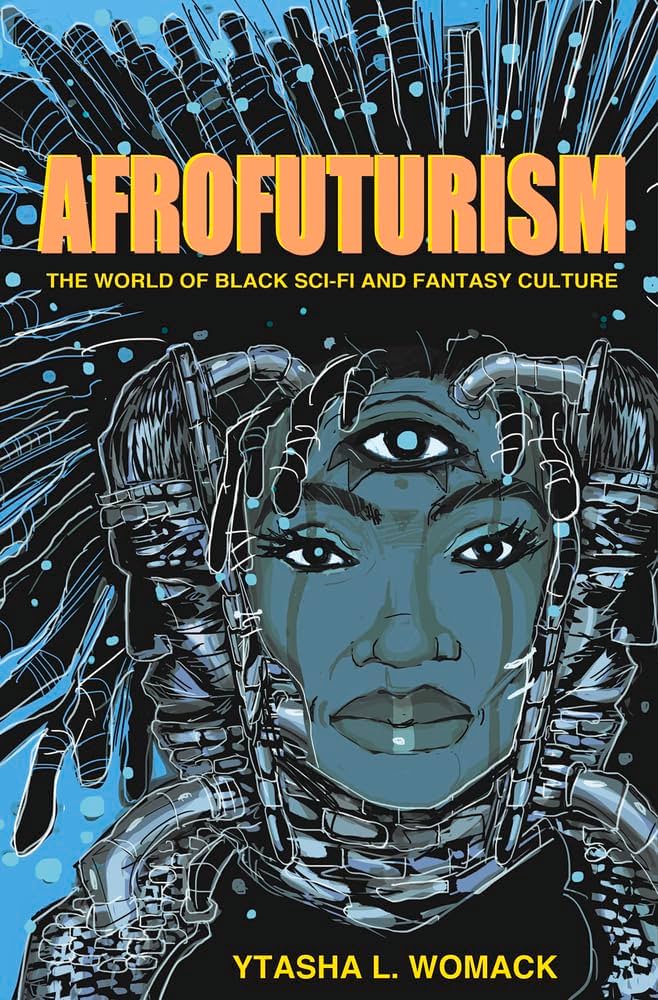
Afrofuturism: The World of Black Sci-Fi and Fantasy Culture
Ytasha L. Womack’s book is an absolute staple for all Afrofuturism travelers. Fun, cleverly written and a joy to read, it provides a foundational bedrock of the music, literature and art that have shaped the genre. She aptly explains that “this dance through time travel that Afrofuturists live for is as much about soul retrieval as it is about jettisoning into the far-off future, the uncharted Milk Way, or the depths of the subconscious and imagination.”
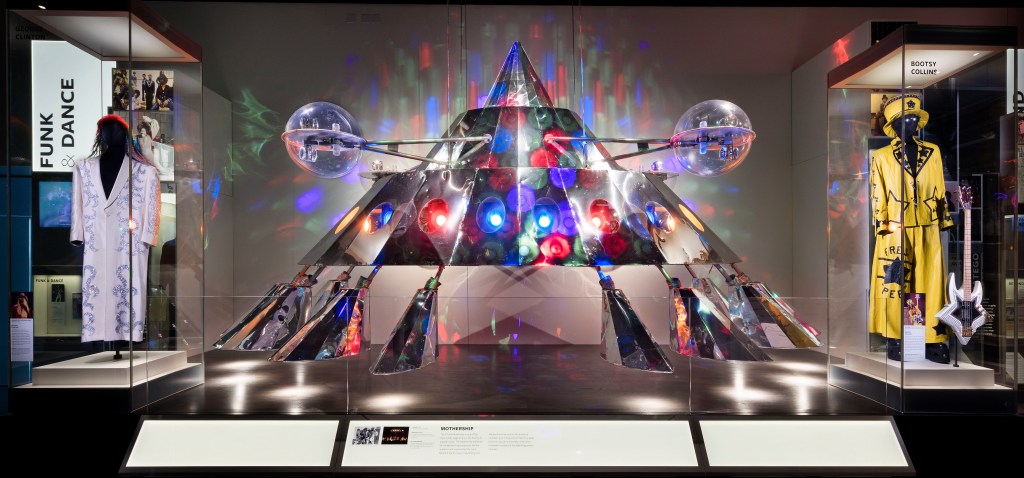
She meticulously credits the work of Afrofuturism greats like Sun Ra, George Clinton and Octavia Butler while detailing her own personal journey through Afrofuturist and other sci-fi works. She reiterates that many of us were Afrofuturists before we even knew the term existed and explains the importance of the movement through a slightly critical yet effortlessly effervescent lens.
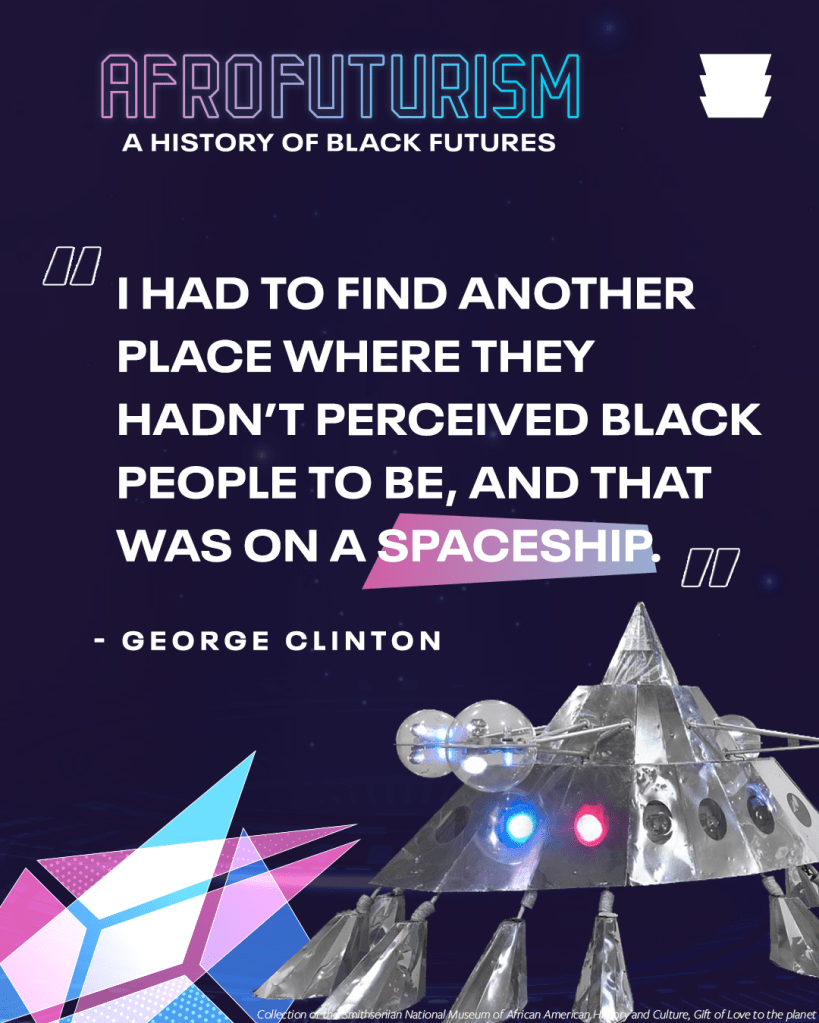
NMAAHC’s Afrofuturism: A History of Black Futures
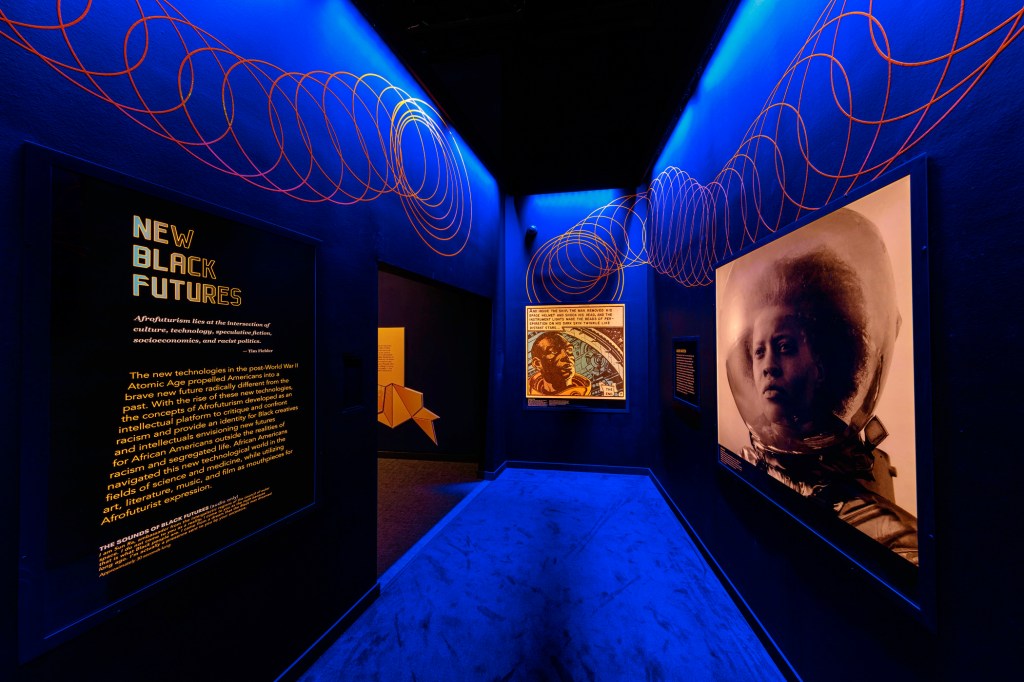
The National Museum of African American History (NMAAHC) has so many different resources on their website about Black history and culture, naturally. This past summer they opened an exhibit called Afrofuturism: A History of Black Futures. I detail my experience visiting the exhibit in this blog post (link post). Their Afrofuturism website does a nice job of explaining what Afrofuturism is and provides info about Afrofuturist stories, icons and visionaries that are featured at the museum.
You can even get the low down on tips, tricks and terms to get the most out of the exhibit as well as reserve tickets if you plan to visit (I highly recommend that you do!). If you’re not able to travel to the physical exhibition, no worries, you can also check out the digital exhibition which offers an exploration of multiple Afrofuturist themes and a musical timeline that goes from 1900 to 2020.
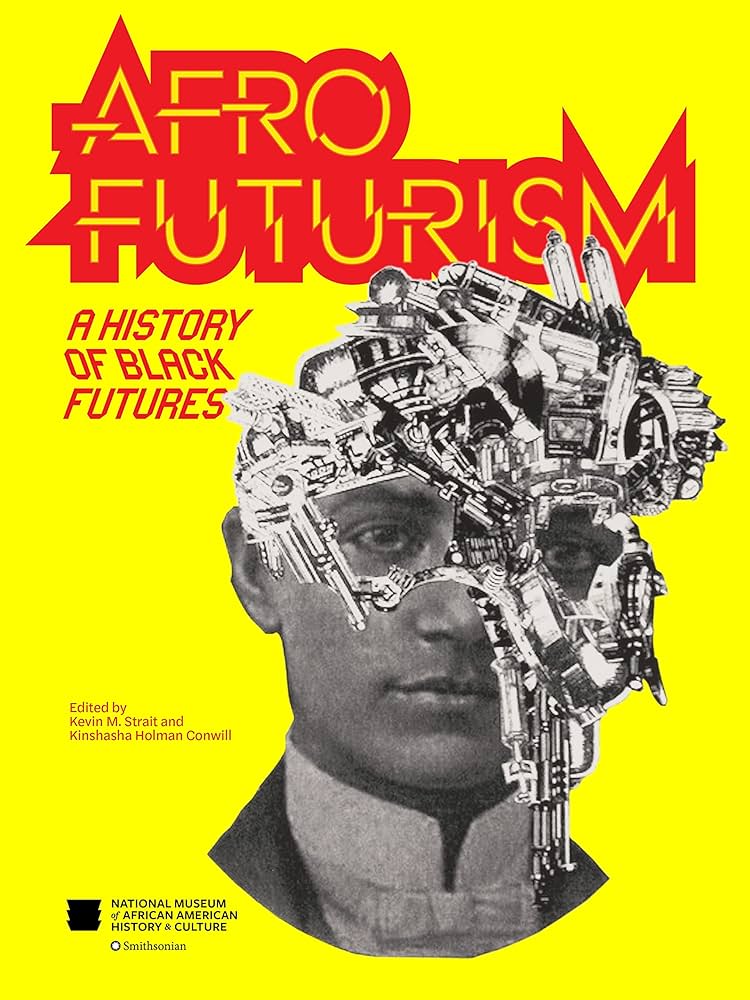
Afrofuturism: A History of Black Futures Book
The NMAAHC also released a companion book that coincides with the exhibition. It is an absolutely gorgeous table book that prominently features many Afrofuturist works and artists splashed among its colorful pages. Pro tip: I was able to buy a copy on Amazon for $10 less than the listed price on NMAAHC’s site! The museum describes the book as having sumptuous, beautifully designed spreads (I most definitely agree) featuring more than 125 illustrations of objects and images that reflect Black identity, agency, creativity and hope.
It also features a collection of essays from different artists and scholars including Ytasha, with various Afrofuturist themes including legacy, alienation and activism. The book explores a wide array of aspects from the genre including its connection to space, music, comics, sci-fi, literature, film, TV, visual art and more. This is certainly a well thought out introduction and collaborative piece.
Black Quantum Futurism
I stumbled upon this website when researching Afrofuturism specifically in the Philadelphia area. Black Quantum Futurism is a literary and artistic collective that is run and curated by Philly natives Rasheedah Phillips and Camae Ayewa a.k.a. Moor Mother. If you’re wondering what exactly Black Quantum Futurism is (as I was), according to their website it was named for the set of Afrofuturist theoretical frameworks and methodologies proposed by the collective.
Moor Mother and Phillips both have very impressive resumes on the subject from artist fellowships and commissioned projects to exhibitions, installations, performances, workshops and so much more. They also have a list of local and international events that are centered around Afrofuturism. This site is truly a portal into another universe, I have yet to explore all that it has to offer. Every time I visit, I discover something new, and the resources really seem to be endless.
Afrofuturism Wikipedia Page
I’m not your college professor, and I’m here to tell you that it is totally okay to use Wikipedia as a resource lol! This is a pretty decent source if you want a crash course in Afrofuturism. While it is not comprehensive by any means, the page does include the history, criticism and progression of the genre. There is also a pretty extensive breakdown of what and who Afrofuturism looks like in the 21st century. It then moves into Afrofuturism in literature, comics, art and film.
One of the most fascinating aspects of this Wiki page to me is the exploration of Afrofuturism themes including feminism, the grotesque(!!), alienation, water and reclamation. The prime real estate really goes to the references and further reading sections though. If you are curious or want to do more research about Afrofuturism, this is a great starter list of additional resources to look into.

 The Beginner's Guide to Afrofuturism