In a captivating exploration of Afrofuturism and its deep-rooted narratives, we travel into the visionary world of Ayana V. Jackson, the artist and creative force behind the groundbreaking exhibition, “From the Deep: In the Wake of Drexciya.” With her unique blend of artistry and storytelling, Ayana sheds light on her inspiration and journey creating this monumental work through the origins of an underwater myth and the transformative power of reclaiming forgotten histories. Ayana, in collaboration with others, brings to life a submerged haven of African water spirits at the National Museum of African Art carefully curated by Karen Milbourne, focusing on the mythical world of Drexciya and the powerful narratives it weaves.
The Drexciyan Myth
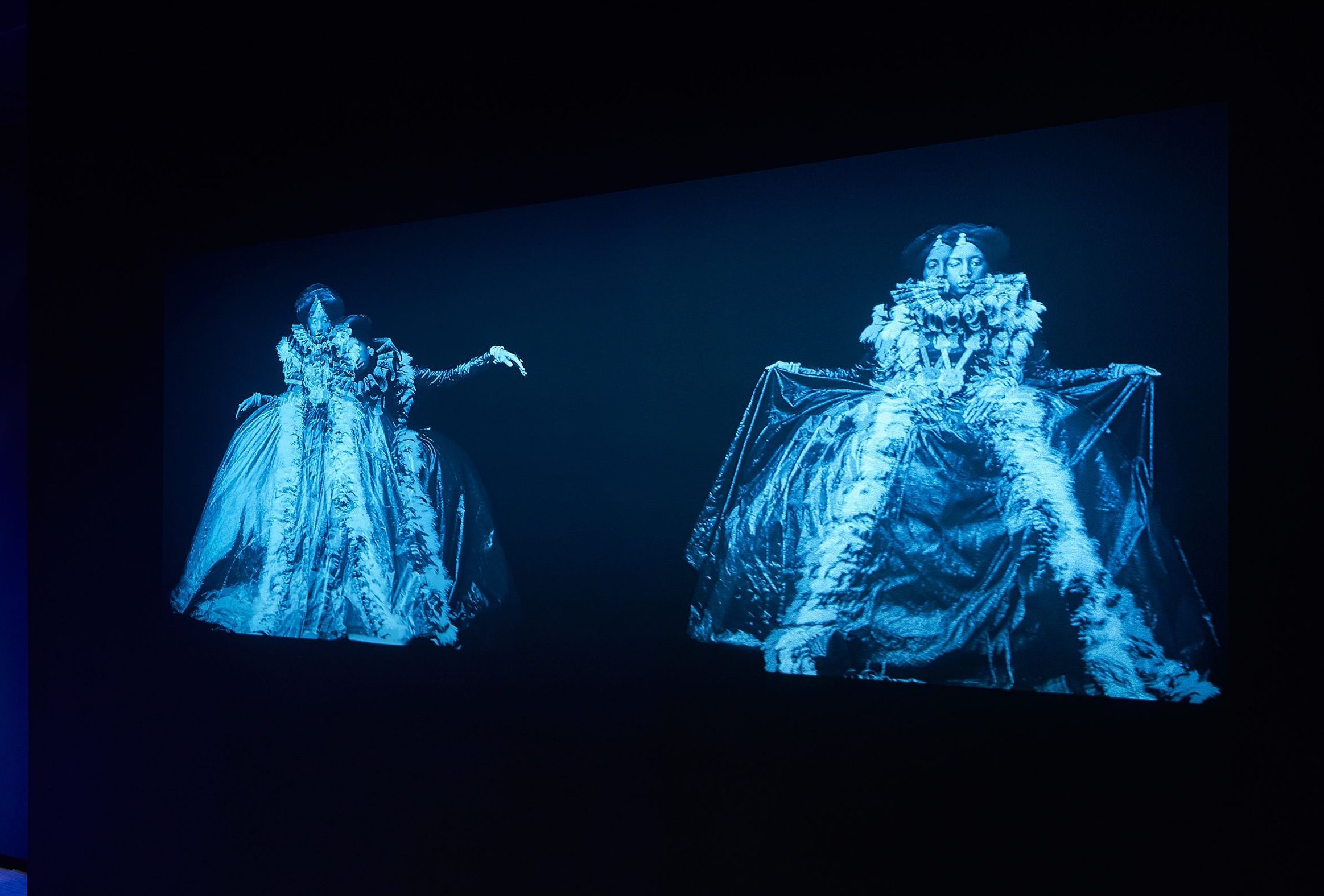
Photo Courtesy of Ayana V. Jackson
Drexciya, a foundational myth in Afrofuturism, originally created by the members of the Detroit techno group of the same name, serves as the cornerstone of Ayana’s exhibit. Her discovery of Drexciya began through a series of conversations that revealed the myth’s stark reality: the historical practice of throwing pregnant women overboard slave ships. Drexciya revolves around the idea of an underwater civilization populated by the descendants of those women. According to the myth, these pregnant women adapted to life underwater, giving birth to children who evolved into an entirely new species known as Drexciyans.
“It was something that really kind of hit me in the chest or almost like a sucker punch to the gut. I think that the first conversations were about this underwater aquatopia, it was another conversation altogether when I learned that the pregnant women being thrown overboard slave ships was an actual practice of the transatlantic slave trade. I feel like the day that I realized that part of the myth or where that myth intersects with reality was transformative,” Ayana says.
This realization came a decade prior to her fellowship at the Smithsonian and propelled her to explore a body of work that marries the mythical Drexciyans with water spirits. “In considering what I would propose I kind of reached back into that bag of inspiration and decided to look at water spirit iconography in countries impacted by the slave trade. In service of a potential body of work that would look at a collision or an encounter, rather, between the Drexciyans and the water spirits, that’s kind of how it happened. It was really like a series of conversations, an idea stuck in the bag of ideas, and then the opportunity to bring it to the surface through the fellowship,” she says.
Creating a Mermaid Aquatopia
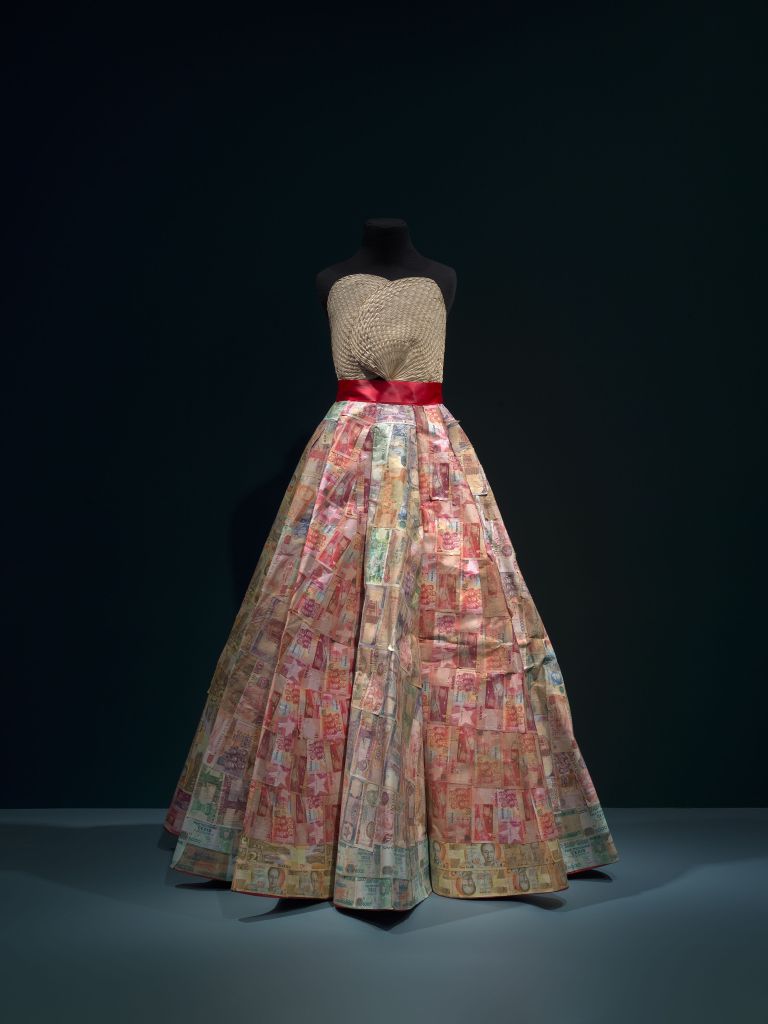
Photo Courtesy of Ayana V. Jackson
After receiving the fellowship, Ayana embarked on a journey to bring the myth of Drexciya to life through her art. From the streets of London, Senegal and Detroit to the shores of Trinidad and Tobago, Ayana’s quest for inspiration took her to some far corners of the globe. “Although the first conversations were in person, one of the most profound moments, or, things that I’ve heard said about Drexciya comes from Greg Tate, where he says that Drexciya takes the middle passage from a site of annihilation to a realm of possibility. I think the first time I read that, I was also kind of thinking that’s exactly what I wanted this exhibition to do,” Ayana explains.
In Ayana’s experience, she often encounters audiences who may not regularly engage with African diaspora, enslavement or colonialism histories. Many individuals learn about these pivotal moments in time through experiences such as encountering a portrait of a woman in Victorian clothing. She has witnessed many instances where people express surprise or newfound awareness upon discovering aspects of this collective past that were previously unknown to them.
As she conceptualized this project, Ayana realized the potential to draw people in with the allure of mermaids and the enchantment of an aquatopia. These elements were intended to act as captivating entry points, enticing audiences with whimsy, before gradually guiding them towards deeper reflections on the global sociopolitical implications embedded within the narrative. “I learned prior to creating this exhibition, that there’s an opportunity in telling difficult stories in a way that is approachable. I think that because it’s photography and it deals with fashion and it’s performance, people are attracted to the arts in that way anyway, and once we have that captive audience, then I’m able to transmit a message,” she says.
Facing the Reckoning
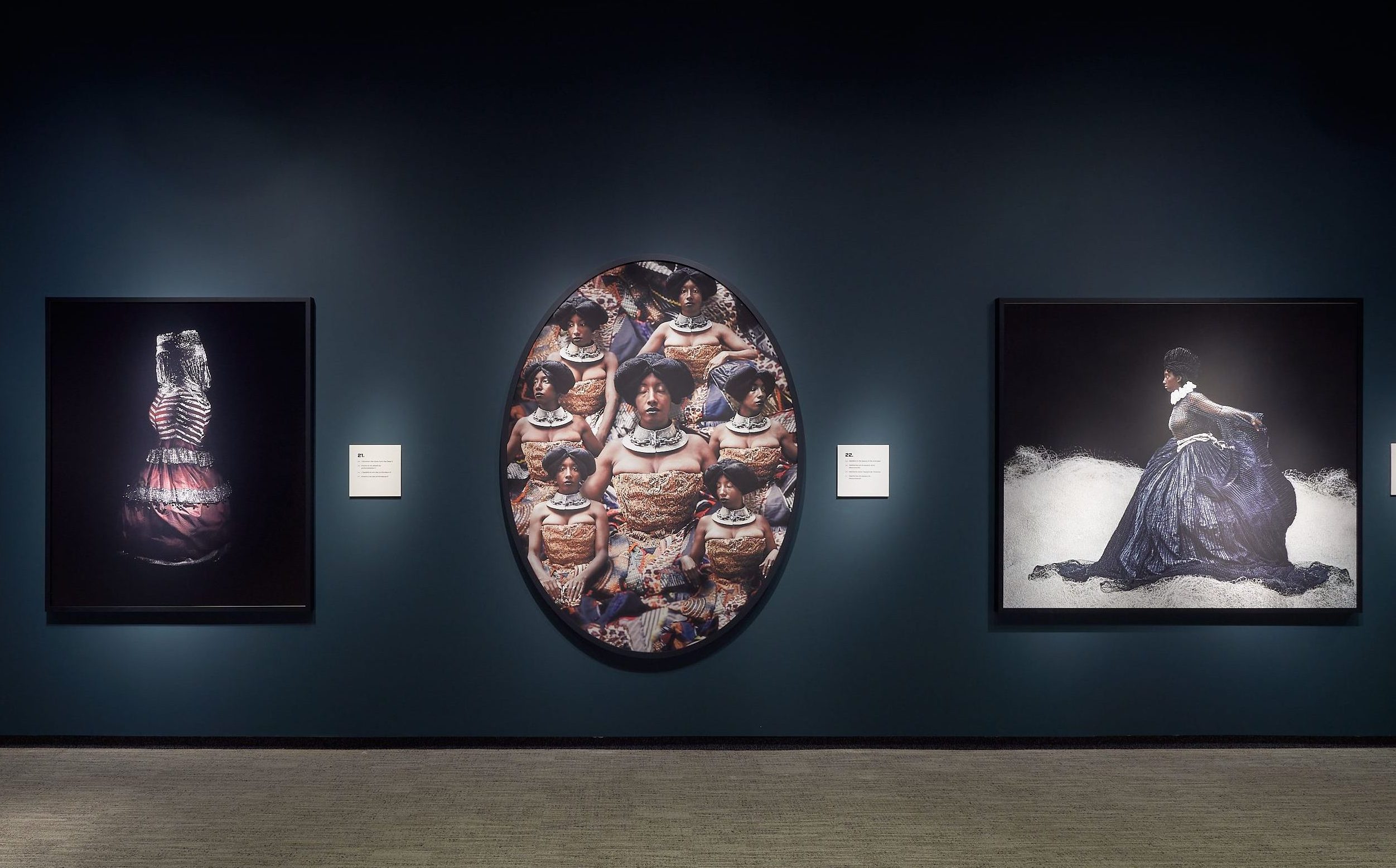
Photo Courtesy of Ayana V. Jackson
Ayana has crafted an exhibition where the allure of the arts can act as a gateway, inviting individuals to explore topics they may have otherwise overlooked or avoided. Importantly, she believes in empowering the audience to choose when and how they engage with these subjects, allowing for a more meaningful and personal connection to the narratives presented. Ultimately, the intention behind this project is to provoke a reckoning of sorts—moments of introspection and reflection that encourage individuals to confront uncomfortable truths and contemplate the complexities of our shared history.
While the path towards this reckoning may vary for each person, the opportunity for dialogue and discovery remains ever-present within the exhibition’s immersive experience. “I believe that the audience has a chance to choose when and how they want to enter these subjects. So, for me, that reckoning is definitely the intention of the project, but it wasn’t something that I had to force. A lot of this work is also about reengaging with our mythologies, and that can also be a challenge for some people. So, there’s so many little bits that folks can mine whenever they’re ready, but it’s all there with intention,” Ayana explains.
Submerging Experiences
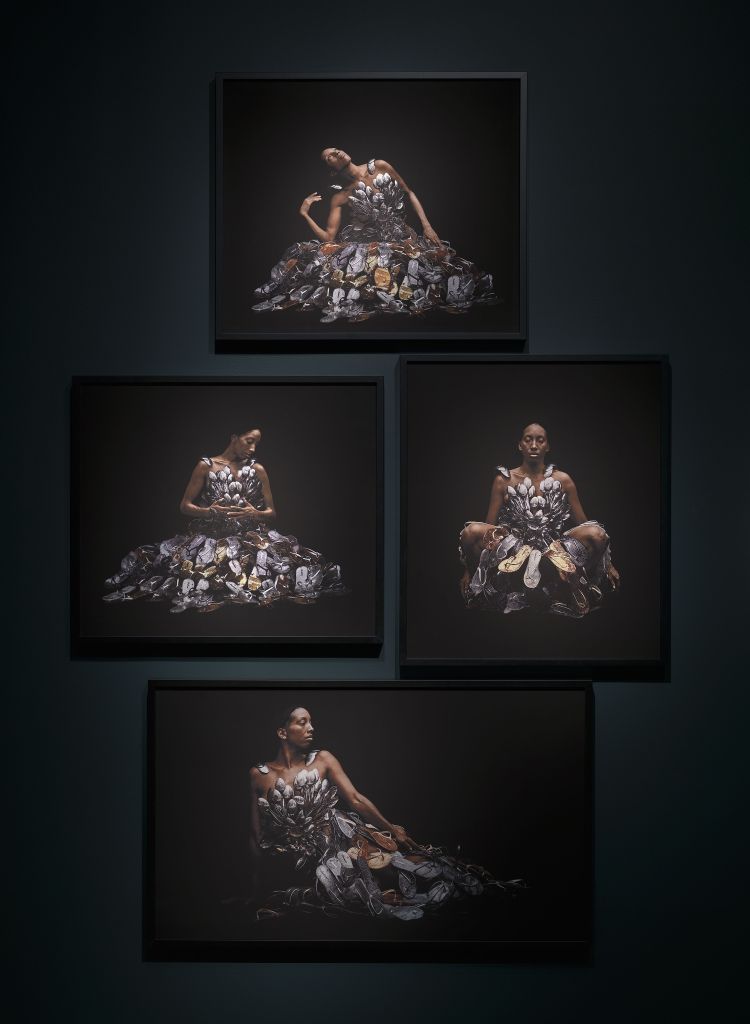
Photo Courtesy of Ayana V. Jackson
Reflecting on the collaboration, Ayana emphasizes Senior Curator Karen Milbourne’s pivotal role in shaping the exhibition’s spatial and conceptual elements, while also acknowledging her own background in social science and creative pursuits like photography. The organic evolution of the exhibition was also influenced by the pandemic-induced delays, allowing for a broader exploration of elements beyond photography and costume. Ayana recalls how her unexpected 10-month stay in Tobago due to the pandemic led to the creation of a four-channel video, and to her becoming a certified dive master in order to reach the depths of the ocean that accurately depicted the depths of Drexciya.
Collaboration played a significant role in the formation of the Drexciyan aquatopia, as Ayana engaged with various individuals such as her partner Zelake for the animation portion of the exhibit. The scent portion came out of a conversation that she had with Abayam early on when doing research. To create the costumes seen in the photographs, animations and videos, she worked with different designers. Olabanji “Cheddar” Arowoshola helped to create the money skirt made entirely of Ghanaian Cedi. Mwambi Wassaki made the raffia skirt, and with the help of his assistants welded together the bodice made entirely of spoons.
Regarding her decision to include herself as the subject in her artwork, Ayana aims for her physical presence to eventually fade into the background, allowing viewers to focus on the symbolic and discursive aspects within the images. “My hope is that very quickly my physical self becomes invisible. Eventually, you know that you’re looking at the same person and so you stop looking to engage with the person on the other side of the lens and hopefully begin to engage with the discursive symbolism. That is the other discursive elements within the image, the costuming, the background, the expression, the posture,” she says.
Mark of the Drexciyans
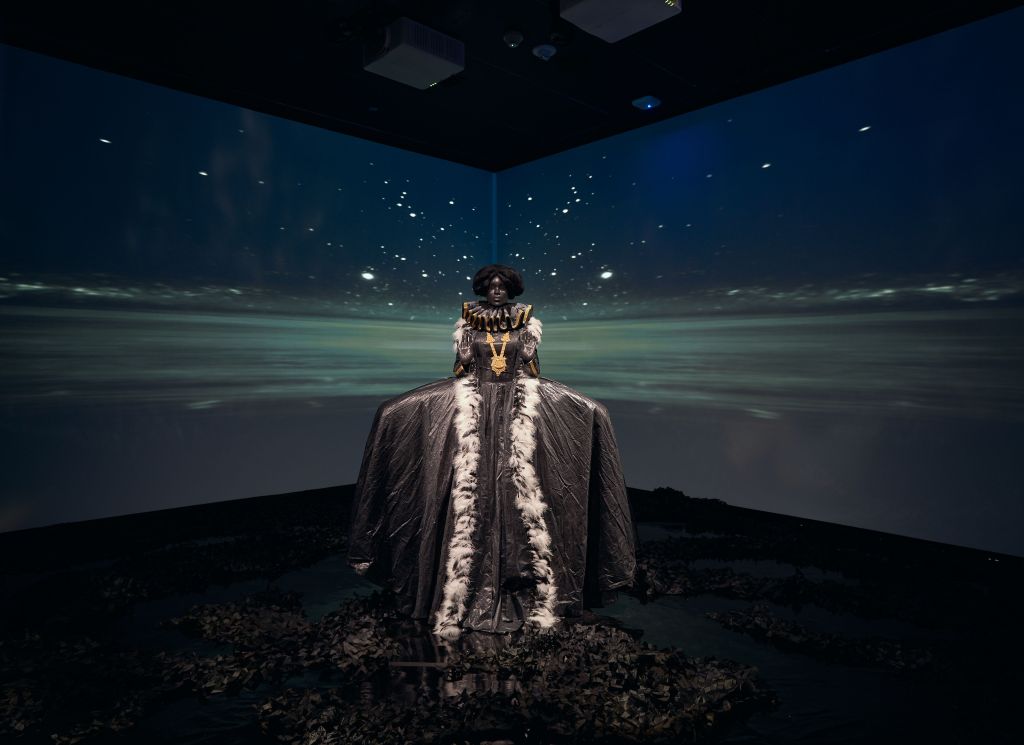
Photo Courtesy of Ayana V. Jackson
Ayana grappled with the responsibility of representing spiritual themes in the exhibit despite not being initiated into any specific belief systems herself. In developing these characters, she envisioned the Drexciyans being born into the underwater world with the help of midwife spirits and the babies would carry the mark of their midwife. “My brain did ask, how could these babies be born while their mothers are dead or dying? And that’s when I started to consider the idea of the water spirits being able to inhabit an octopus or a squid that would be able to actually help to create a labor. That’s kind of how the whole idea came of them as midwives,” she explains.
These characters truly take shape in the exhibition, such as the depiction of an Elizabethan-like figure inspired by a portrait of Queen Elizabeth, serving as a stark reminder of England’s involvement in the slave trade. Positioned in a manner of unapproachability, with her hands raised as if signaling a halt, the portrait symbolizes the power dynamics between the oppressor and oppressed or the above and below as Ayana calls it. Another great example is the character wearing a skirt made of Ghanaian money. This was inspired by a conversation with her aunt in Ghana about this belief that some of the fishermen have a whole banking system in the sea, so she envisioned a figure that would emerge from the water embodying the colonial history of Ghana wearing 50 years’ worth of bank notes.
The character wearing the bodice made of spoons and a skirt made entirely of gold and silver flip flops, was based off a song called “Cruise Ship Killers” by Drexciya. The figure is fashioned as if they had pulled items from a sunken cruise ship. “The raffia I enjoyed because it had me think about if the Drexciyans are, like, fashioning themselves from things that they are encountering in the sea. With that one, you know, what it would it mean to fashion yourself off of stolen artworks from a sunken ship that was carrying stolen artwork? It was a way to really have a conversation with what that means. Of course, the exhibition was happening in the context of conversations about appropriation and the repatriation of artworks,” she says
Ayana’s Mythologies
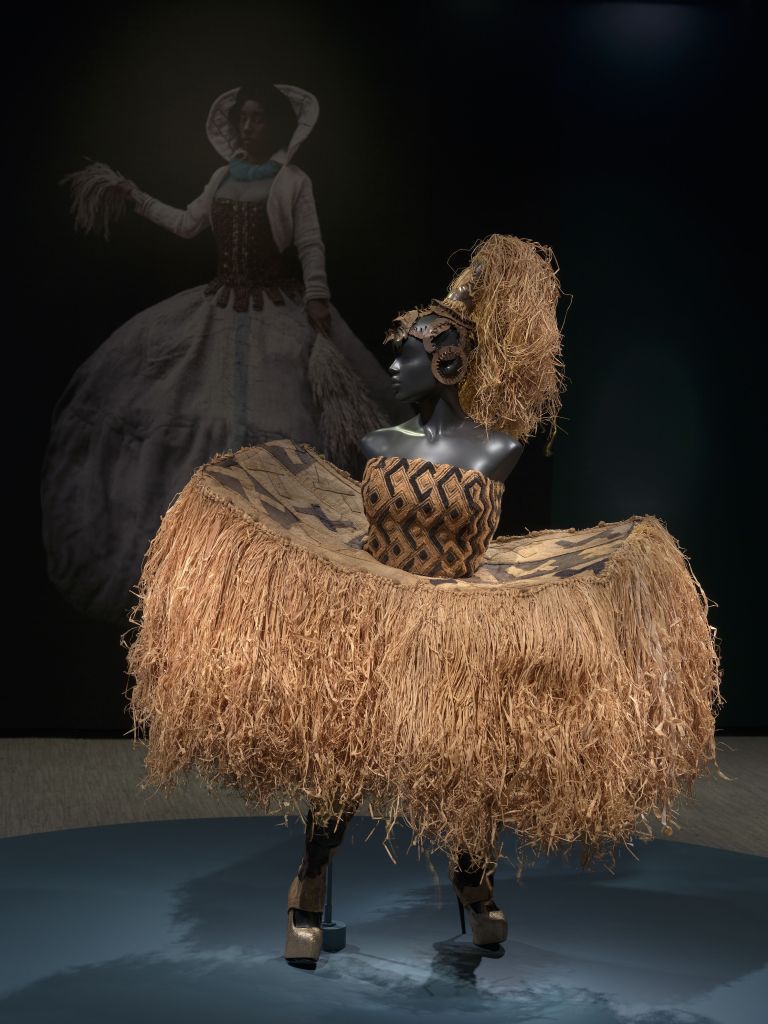
Photo Courtesy of Ayana V. Jackson
As Ayana reflects on the culmination of her project, she underscores the importance of origin stories and the impact they have on shaping identity. Recalling her upbringing in a pan-Africanist family, Ayana acknowledges the intentional discourse surrounding enslavement and resistance, which offered a nuanced perspective beyond mere victimhood and the narratives articulated by the school system. “From the Deep: In the Wake of Drexciya” aims to reacquaint us with African mythologies, belief systems and religions, depending on what angle you look at it from, she explains.
In discussing the broader implications of her work, Ayana expresses the significance of mythologies and belief systems originating from the African continent. “Mythologies are essential to help us to see, to expand our understanding, of who we are in the world and how we explain the unexplainable and our relationship to the natural world. I think that belief systems that come from the continent are as legitimate, and as interesting and as able to contribute to all of those ideas, to how we gave to the natural world and the unexplained and the unknown as any other system that we get to study,” she continues.
Despite her reservations about labeling her work as Afrofuturism because she did not initially intentionally choose to engage with the genre, Ayana acknowledges its inevitable intersection. Drexciya allowed her to have a conversation about mythology and water spirits. “That need for us as a people to revisit who we are in this world and our relationship to the cosmos, not just to this earth, but also to the cosmos, is essential. And anything that I find that is rooted in Black liberation is worth my time. And I think Afrofuturist thinking, and philosophy is 100% rooted in liberation. I’m happy to have my contribution to it in the form of this exhibition,” she says.
By weaving together elements of history, spirituality and imagination, Ayana not only expands the boundaries of Afrofuturism but also offers a poignant reminder of the enduring quest for liberation and self-determination within the Black diaspora. Through her artistry, she invites audiences to embark on a profound journey of rediscovery, challenging entrenched narratives and celebrating the resilience of African mythologies. Make sure to check out my detailed guide to “From the Deep: In the Wake of Drexciya” for valuable insights and inspiration when you visit this spellbinding exhibition.
What are your thoughts on the portrayal of the Drexciyans in Ayana’s exhibition, and how do you perceive their significance in the context of Afrofuturism and cultural narratives? Let me know in the comments below!
 The Beginner's Guide to Afrofuturism
Leave a comment