
Embarking on a pilgrimage through the cosmic corridors of the City of Brotherly Love, I find myself drawn into a captivating mission—a journey to unravel the enigmatic legacy of Sun Ra and the Arkestra. I decide to concentrate my efforts on searching for his essence in Philadelphia, and while my search here is beyond fruitful, I also find him in some unexpected places as well.
In part one of this saga, we bask in the aura of Sun Ra’s former residence, explore the celestial symphonies of the Arkestra, walk the corridors of the Philadelphia Free Library’s music department and venture into the Penn Museum to relish a relic that Sun Ra once stood before. So, strap in and prepare to journey beyond the confines of space and time as we explore the mysteries of Sun Ra’s enduring legacy.
Sun Ra’s Immortal Dwelling
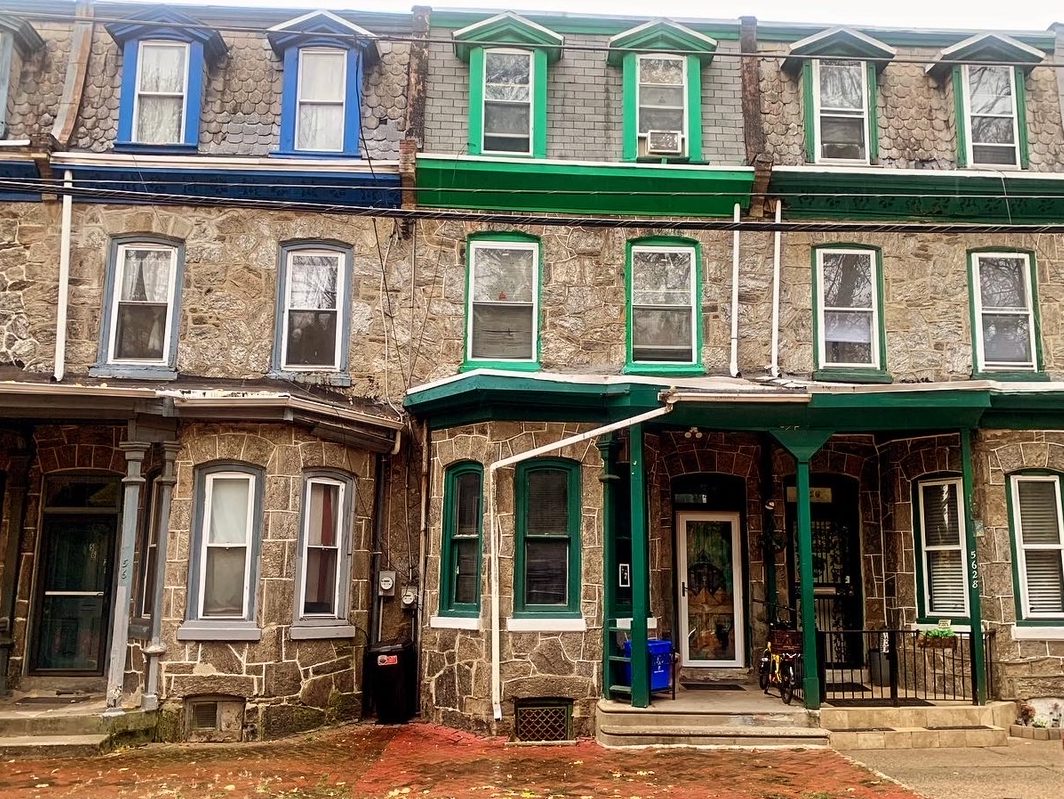
Photo by Makayla White
My pilgrimage begins in the neighborhood of Germantown, where the legendary Sun Ra once lived. The townhouse, with vibrant green trim, is initially unassuming and nearly identical to the others on the street until you take a closer look. According to Philly Voice, Ra lived and rehearsed here with members of his band from the mid-60s until his death in 1993. Current band members, Marshall Allen, who just celebrated his 100th birthday, and Knoel Scott still live here. After the Philadelphia Historical Commission voted to grant the property protected status in May 2022, it is now a historic landmark.
Walking up to the house I begin to notice that this is no ordinary Germantown home. There is a picture of Sun Ra and John Gilmore laminated and taped to one of the windows. The biggest giveaway that this house is galaxies far away is the door. Swirls of blue, green, black and gold paint cover the entryway. The artwork conveys a starry sky with an ankh, pyramids, a pharaoh and what looks like Horus underneath it. Gold flecks of paint dance across the renewed canvas and every pyramid shape is illuminated in the same hue. Other than that, there is nothing really out of the ordinary, a plant hangs near the door and a recycling bin and yellow bicycle are stationed on the porch.
It is hard to tell from the outside what impact this residence has had from the inside. Standing before the humble abode that housed the visionary and his band, I feel a profound sense of reverence. This place, nestled amidst the brick-lined streets, bore witness to the genesis of Sun Ra’s boundless imagination. As I gaze upon the facade, I can’t help but wonder about the inspirations that permeated these walls. What otherworldly melodies echoed through these rooms, and what visions of distant galaxies ignited Sun Ra’s creative fervor? Though silent now, the house still whispers tales of musical transcendence, inviting us to take a deeper look into the Afrofuturistic world of its current and former inhabitants.
A Celestial Soiree
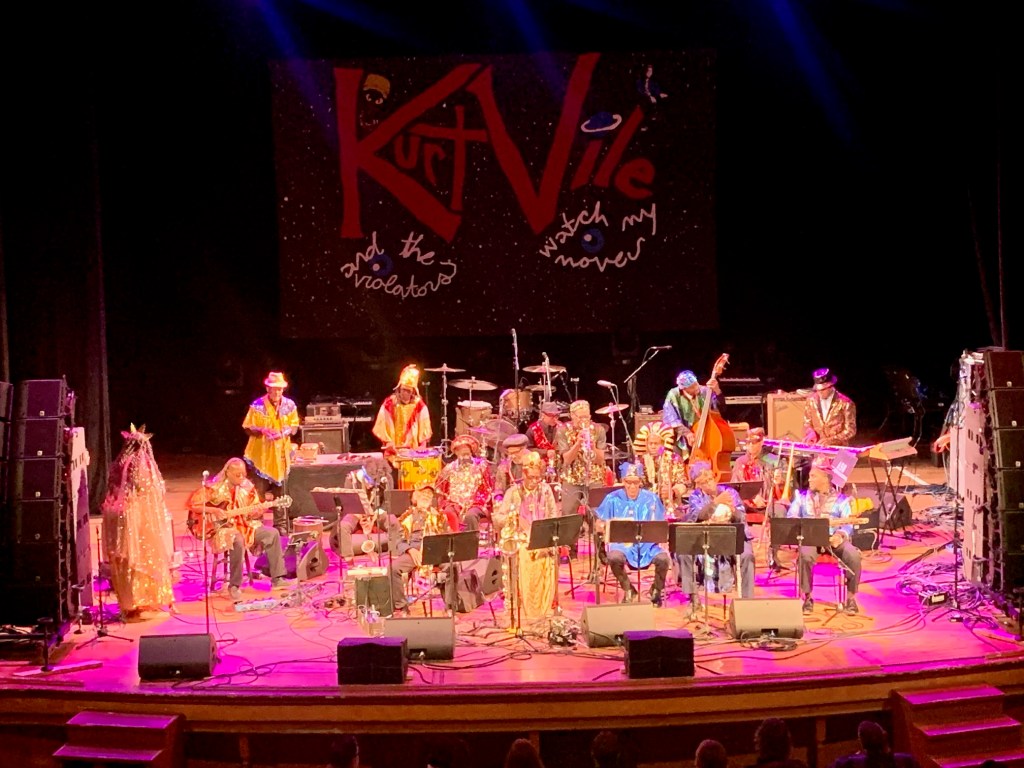
Photo by Makayla White
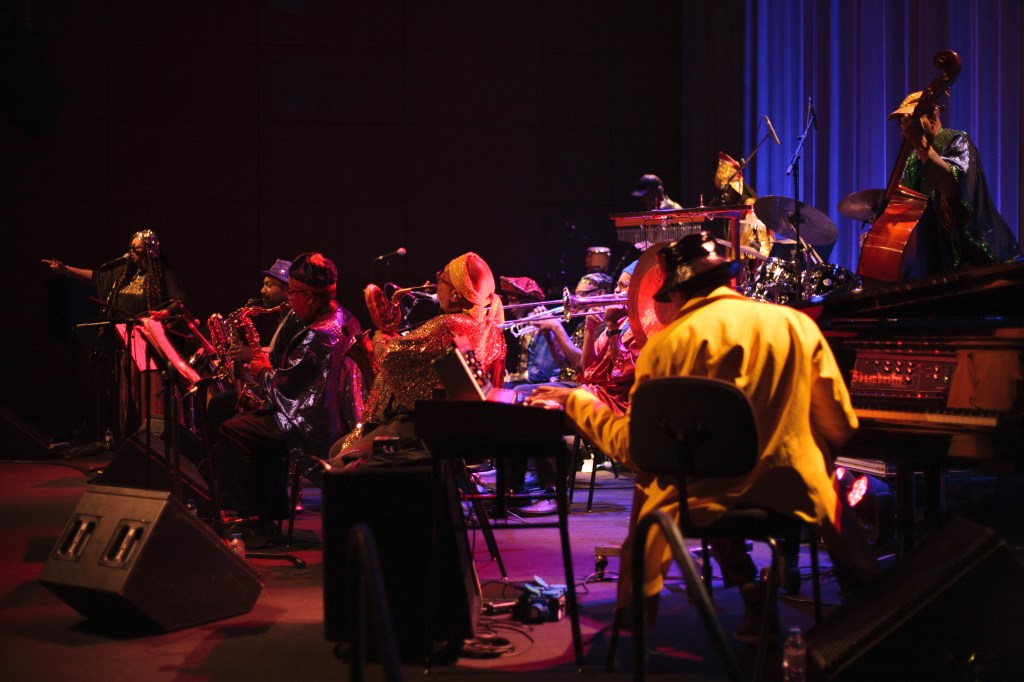
My next stop guides me to a rendezvous with the living legacy of Sun Ra—the Arkestra. In what feels like surreal timing I am able to score tickets to see them perform at Miller Symphony Hall in Allentown, Pennsylvania. Entering the venue and seeing the Arkestra on stage, I am enveloped in a kaleidoscope of sound and color. The performance space, similar to the Arkestra, is vast, beautiful and historic. I count 18 members of the Arkestra in total. They are adorned with a myriad of instruments—guitars, saxophones, trombones, trumpets, bongo drums, flutes and even a gong. The ensemble is quite clearly an amalgamation of musical dimensions that speak to the essence of Sun Ra. The band members shimmer in a sea of golden splendor with their Egyptian and steampunk-esque costumes.
The performance unfolds like a symphony, a mix of eclectic jazz and classical strains. The lead singer, Tara Middleton’s voice soars, singing the lyrics: “We travel to space, space from planet to planet” on a loop. Instrument solos echo through the venue, met with hoots and hollers from an audience that seems to be a wide array of ages and backgrounds. Marshall Allen leads the band in a gold hat and vest, taking the audience on a journey that truly transcends the confines of the stage. They wrap up playing a song written by Sun Ra called “Angels and Demons at Play.” The Arkestra is an experience to say the least.
They walk off the stage, bathed in a flash of gold and blue, leaving the audience in rapturous applause. Exiting on both sides, they play their instruments in the aisles, creating an immersive experience that quite literally defies traditional concert boundaries. After the performance, the crowd lingers, discussing the greatness of the Arkestra. T-shirts and hats adorned with Sun Ra’s face become coveted treasures and tangible mementos of the experience. I hang around for a while too hoping to catch a glimpse of the Arkestra, but no such luck. The air buzzes with post-concert energy and as I stand amidst the crowd, I feel that elusive proximity to Sun Ra.
Cosmic Treasure Hunt
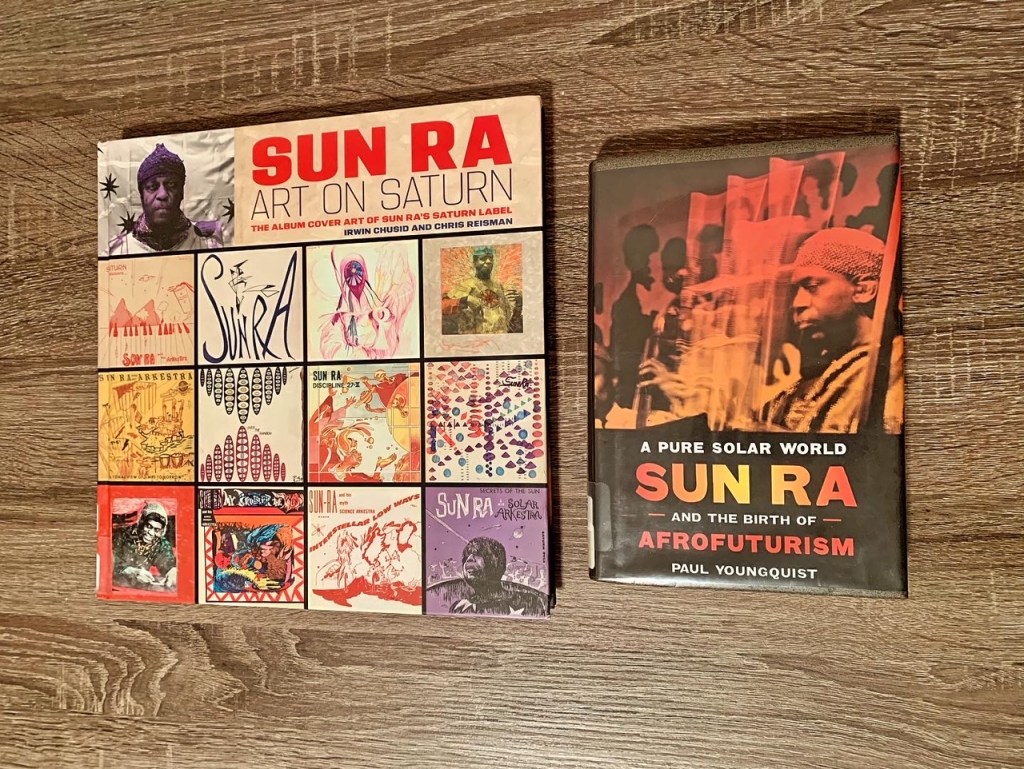
Photo by Makayla White
In my continued search, I take a trip to the Free Library of Philadelphia. I have been meaning to visit this library since I moved to Philly and my search for Sun Ra finally gives me yet another reason to go. I sign up for a library card online and make my way to their main Parkway Central location. I look up the titles I want to check out ahead of time and speak to a librarian who directs me to the music department. There I find walls of instruments, albums and books about musicians. A man plays an electric keyboard as I approach the help desk to find the Sun Ra titles I’m in search for: Sun Ra Art on Saturn and a Pure Solar World.
The first is hard to find, and then I spot it, almost beckoning to me, in a fully glorious display amidst the many rows of books. This is what I came here for. The retail value of this gem is $75 so finding it in the library is a steal. It is a book that has the cover art of Sun Ra and the Arkestra, most of which they made by hand. The synopsis reads: “This book is a tribute to the covers and to the uncredited visual artists and their rich imaginations. From the simple to the baroque to the absurd, the covers that sheathed Ra’s discs reflect the tenaciousness of a genius who refused to compromise or relinquish control of his destiny.” I grab the titles and happily trot home with my newly found treasures. With each page I turn, I dive deeper into the labyrinth of Sun Ra’s life and philosophy, discovering new dimensions of his transcendent vision.
A Joyful Sphinx
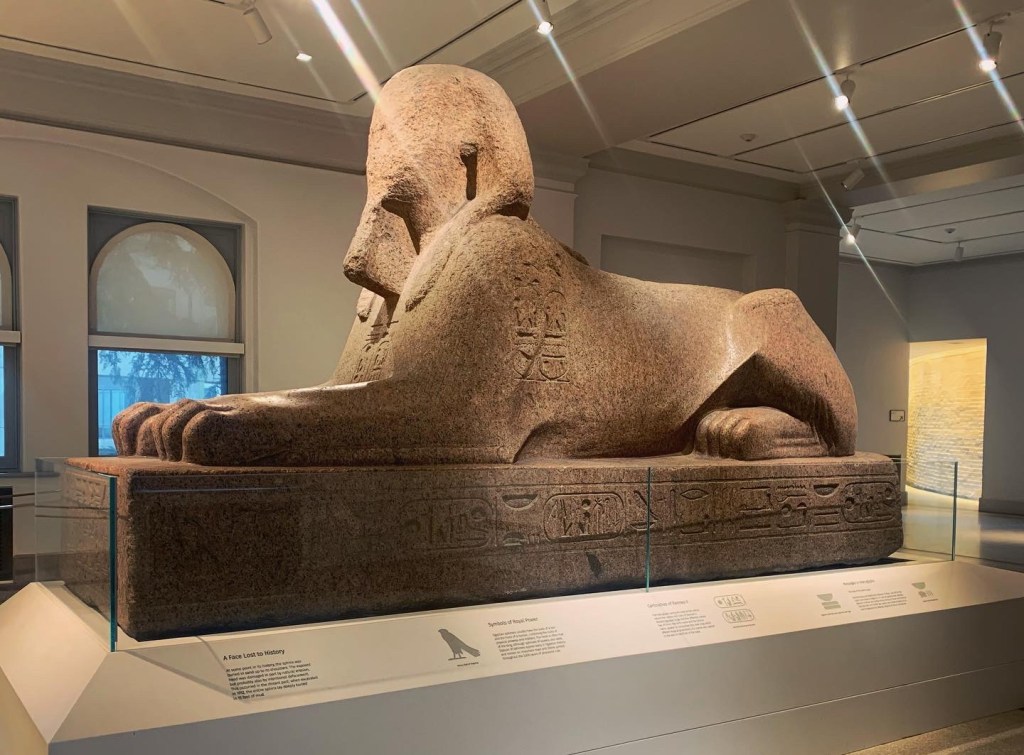
Photo by Makayla White
This odyssey reaches another zenith at the Penn Museum, where an ancient sentinel stands watch—the sphinx. This was my first visit to the museum which has many rooms of fascinating artifacts, but my primary mission was to lay eyes on the Sphinx. This iconic monument bore witness to Sun Ra’s presence, and I have to go and see it for myself. Sun Ra and the ancient relic are both immortalized in the documentary, “Sun Ra: A Joyful Noise.” Towards the beginning of the documentary, Sun Ra stands with his arm casually gracing the Sphinx as he discusses his ideas about history, space and time. In true Sun Ra fashion, he is wearing an Egyptian headpiece, cape and colorful sparkling top. He ponders for a moment as he grips the Sphinx and says: “In my music, I speak of unknown things. Impossible things. Ancient things. Potential things. No two songs tell the same story. They say that history repeats itself, but history is only his story. You haven’t heard my story yet.”
An article in the New Yorker effortlessly describes the moment: “Sun Ra, who was in his mid-sixties at the time of the film’s shooting, is first seen amid Egyptian artifacts at the University of Pennsylvania Museum, speaking of the limitations of earthly creation and the creative power that comes from outer space—a prime declaration of the myth-centered futurism that his musical performances dramatize.” Standing in the Sphinx’s shadow, once again I feel that elusive proximity to Sun Ra. The artifact has been beautifully preserved and exhibits the same splendor as it did in the film. As I visually trace the contours of the ancient stone, I can’t help but envision Sun Ra’s ethereal silhouette against the backdrop of ancient Egypt. Here, amidst the echoes of millennia, I catch another glimpse of the cosmic convergence of myth, music and Sun Ra’s enduring legacy.
A Prelude to Revelation
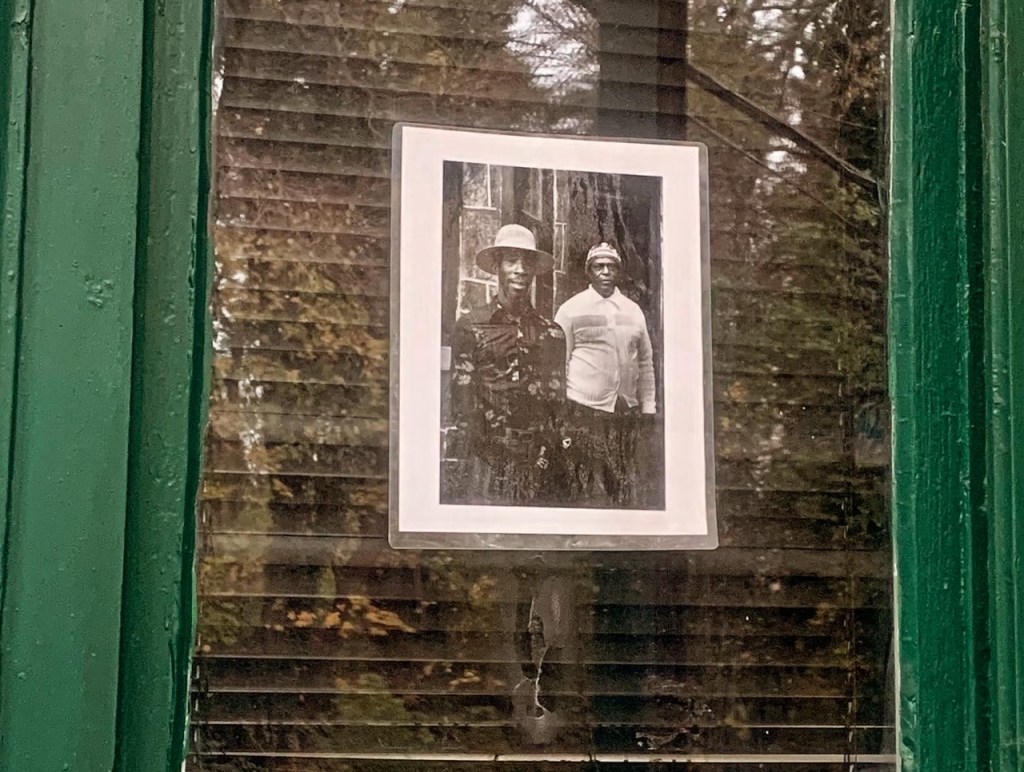
Photo by Makayla White
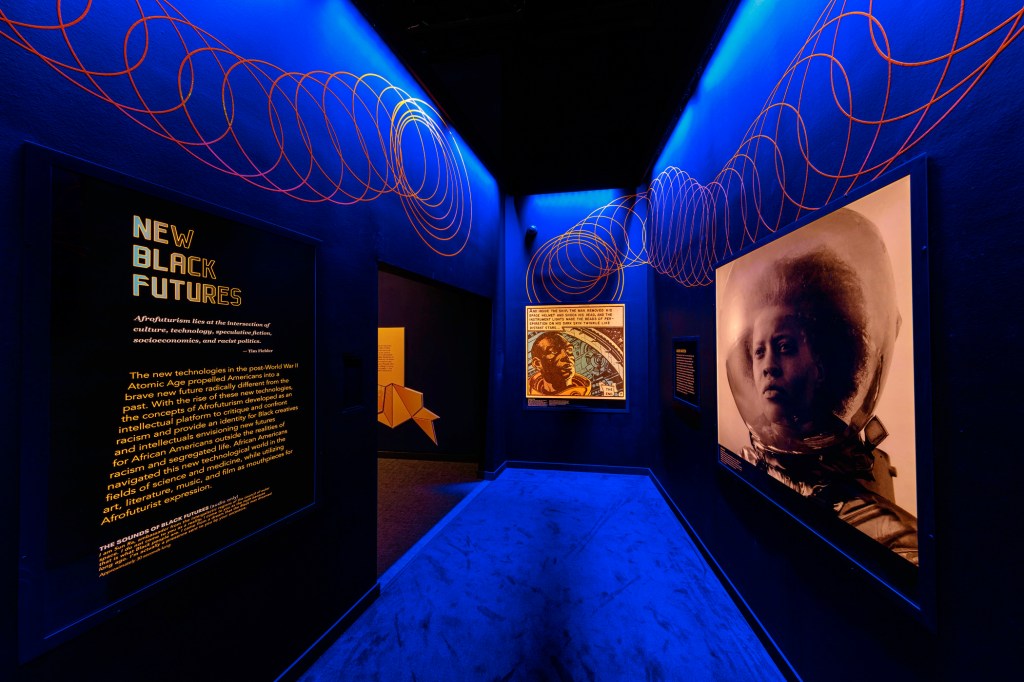
On this journey to discover more about Afrofuturism, I always seem to stumble into Sun Ra which is by no means a coincidence. I made the conscious decision to chase him and somehow, he always seems to find me in the process, whether I’m actively looking for him or not. I find him in Germantown, within the eclectic beats of the Arkestra, at my public library and the Penn Museum. I also find him at the “Afrofuturism: A History of Black Futures” exhibit at the National Museum of African American History and Culture. I find him in every interview I conduct and in the Afrofuturism movies and documentaries I watch; in the Afrofuturistic music I listen to and in the books I read. Befitting of such a celestial being, he seems to be omnipresent in the Afrofuturism world, rightfully so. The chase however, is far from over and the legacy that Ra has left is one for the ages and the stars.
Join me in part two of “Chasing Sun Ra,” where we sink deeper into the cosmic mysteries alongside Suso Navarrete, the Arkestra’s esteemed webmaster for the past two decades and a venerable Sun Ra scholar. In this illuminating interview, Suso shares his insights into the enduring impact of Sun Ra’s visionary philosophy and musical legacy. Through Suso’s lens, we’ll unravel the enigmatic threads of Sun Ra’s cosmic vision and explore its profound influence on contemporary culture.
How has Sun Ra’s visionary philosophy inspired you, and in what ways have you “found” him on your own Afrofuturistic journey? Let me know in the comments below!
 The Beginner's Guide to Afrofuturism
Leave a comment