
At Drexel University, a groundbreaking class has emerged, illuminating the literary legacy of Octavia E. Butler. Associate teaching professor, Vincent Williams, PhD, leads the charge as the instructor of the university’s first-ever class dedicated to her profound works. Williams, a seasoned academic with a decade of experience at Drexel, embarked on this journey driven by a profound belief in Butler’s significance. In this interview, he unravels the intricacies of the course’s themes, the pervasive influence of Butler and some of her most influential works. Additionally, join me as I attend one of his classes, sharing the enthralling experience of this enlightening course.
Visionary Narratives
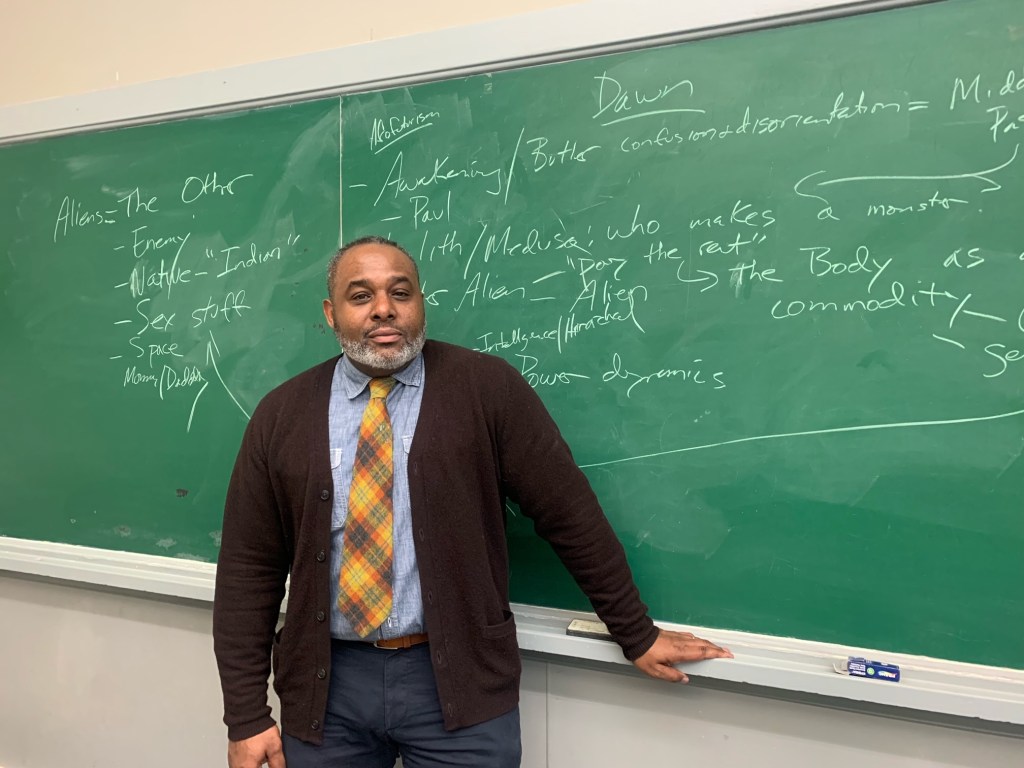
Photo by Makayla White
The professor’s qualifications for teaching this course are underscored by his dissertation, a deep dive into Butler’s writings on the agency of the Black female body. With support from Drexel’s English department, he crafted a course that delves into the big three: race, class and gender, all through the lens of Butler’s visionary narratives.
“Octavia Butler was one of the greatest voices in American fiction of the late 20th century. I think not just as a representative of a Black female point of view, but just her thoughtfulness, her critique of America, both good and ill. I think the way she approaches issues of physicality, gender and race, we are still catching up with it. I felt like she should absolutely be part of any conversation about great writers at Drexel,” he says.
Literary Metamorphosis
Central to the discourse is Octavia Butler’s enduring influence on the literary landscape and society as a whole. Williams articulates the transformative power of Butler’s narratives, which extend beyond the pages of her novels, shaping perspectives and sparking critical conversations. As students explore the landscapes of her work, he hopes that they emerge with a sharpened critical lens and the understanding that a multicultural heterogeneous society is the strongest.
He aims to transform and influence his students by encouraging them to examine societal constructs, question their own perspectives and reinforce the power of community that resonates throughout Butler’s body of work. “It’s always important to foreground those conversations when we’re talking about fiction because we all come from a specific perspective. The great thing about Octavia Butler, especially from the late 70s through the 90s, she was part of this cohort of Black women writers whose voices were being heard and whose perspectives were being respected. I think what really separated Octavia Butler is she was always looking forward,” he says.
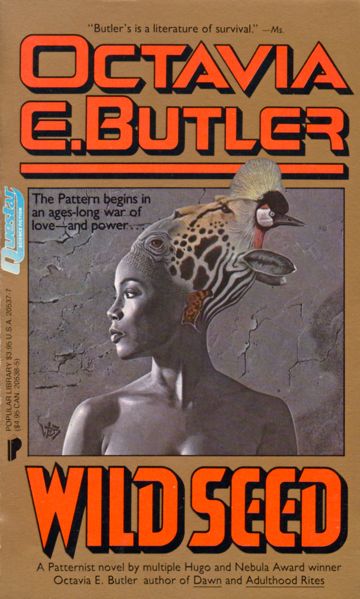
The class recently read Butler’s novel, “Wild Seed,” which Williams explains is centered around an African woman who is a shapeshifter and her fraught relationship with an African immortal who travels from body to body. He says what has been truly rewarding is how students use this novel as a way to talk about what makes us human. He reiterates that as a society we are constantly playing catch up with Butler’s futuristic ideals and expresses that a transgender reading of this book is fairly straightforward and something that she was tackling in the late 70s.
Kindred Spirits
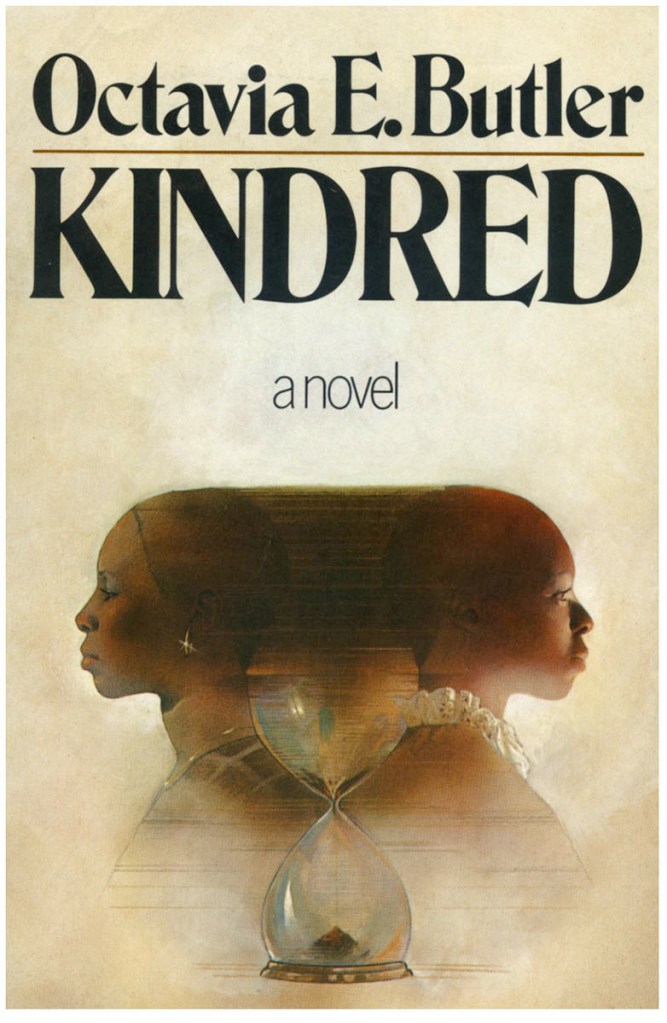
Williams discusses another groundbreaking work by Butler, “Kindred,” that explores the complexities of being Black in America, in a way that other novels of its time did not. It is considered a contemporary novel in which the central character a Black woman, Dana, and her white husband, Kevin, are thrust from modern day back into the slavery era through time travel. They then have to grapple with how that changes the dynamics of their relationship and the decisions they have to make just to survive. Williams unpacks the immediacy and messiness of the narrative, praising Butler’s ability to highlight the intricate facets of what it means to be Black in America every day.
“When you talk about ‘Kindred’ and you group it with, again, that cohort of novels and writings that came out in the late 70s, and that sort of wave of postmodern slave narratives where writers were basically engaging in a version of what Toni Morrison would call rememory, where we’re reclaiming these stories, we’re retelling these stories,” he says.
Kindred on Screen
When discussing the television adaptation of “Kindred” which debuted in 2022 and only ran for one season before its cancellation, Williams expresses both appreciation and reservations. While acknowledging the show’s attempts to capture the essence of the novel, he critiques decisions that deviate from Butler’s original narrative. In particular, the alteration of the protagonist’s relationship dynamics, as the TV series chose to depict a budding romance rather than an established marriage. He explains that this undermines the examination of the complicated dynamics they encounter when they are brought to the past.
“These two are in love and the thing I love about the novel is that there’s never any inclination that these two aren’t in love. So how do you reconcile this Black woman and this white man who love each other, but then they have to grapple with time travel? At one point, Kevin is left in the past for five years. What is the power of this love that it can deal with that? You lose all that if these two people basically just met,” he says.
Despite some missteps in pacing and assumptions about future seasons, Williams says the TV adaptation succeeded in conveying Dana’s realization of the enduring impact of historical choices. He explains that Dana does realize that the past isn’t the past and that she is going to have to make decisions that are not going to leave her with clean hands, but, unfortunately, we never get to see that come to fruition in the series. He is still grateful that there is at least something to work with in terms of showcasing Butler’s work through a different medium. As he tells his students, a draft is better than no draft.
Dawn, Humanity & Aliens
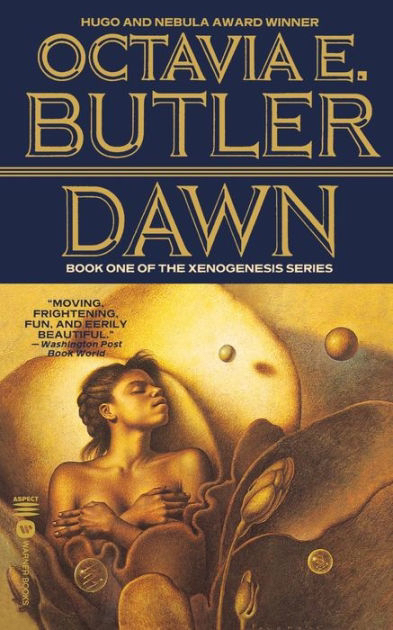
Sitting in on Williams’ course, the focus of the day is Butler’s enigmatic novel, “Dawn.” In this three-part series opener according to the class and Good Read’s synopsis, the protagonist Lilith awakens from a deep, centuries-long sleep onto the Oankali spaceship. The Oankali, an alien race, saved humanity hundreds of years prior from a nuclear war that desolated Earth. After they restore the planet with a plethora of benefits including a cure for cancer and increased human strength, Lilith is chosen to lead her people back home. What she learns along the way, as the Oankali’s plans start to unravel, is that she faces intricate decisions that could lead to a seemingly interstellar bargain with many unforeseen consequences.
The class discussion begins with reflections on “Dawn’s” abstract nature within the science fiction genre, and students grapple with the fundamental question of whether the Oankali act as saviors or captors. The class analyzes the pervasive power dynamics in “Dawn,” exploring the severe inequality in the human-alien exchange, and Butler’s recurrent themes of lack of autonomy over the female body. Williams says this is yet another commentary from Butler on her existence as a Black female. She often talks about her own body as a commodity and as someone who is a descendant of enslaved Africans whose bodies were commodified. He explains her penchant for characters awakening into confusion and darkness, evoking parallels with the transatlantic slave trade’s disorienting nature.
Guided by Williams, the students navigate the challenging and often unsettling terrain of “Dawn.” The narrative’s ability to raise more questions than answers is celebrated as quintessentially Butler. One of the best parts of this course is that Williams allows students to create their own meaning from the text. Drawing on Afrofuturism, he presents a lens through which to interpret “Dawn’s” themes and offers his expertise on Butler and literature as an illuminating light towards the discussion. The class resonates with the dissonance in Butler’s works, acknowledging the coercive relationship portrayed between Lilith and the Oankali as somewhat beneficial but at a significant cost.
Butler’s Rhetorical Jiu-jitsu
Despite not having read “Dawn” prior to the session, I leave intrigued and inspired to explore Butler’s extensive repertoire. The class reveals the dense themes within “Dawn,” emphasizing the wealth of insight hidden within this fervently abstract work. A noteworthy point of reflection is Williams’ elaboration on the thesis from his dissertation—Butler’s rhetorical jiu-jitsu. This concept revolves around Butler turning things that seem the least valuable into the most valuable, a testament to her mastery in challenging preconceived notions.
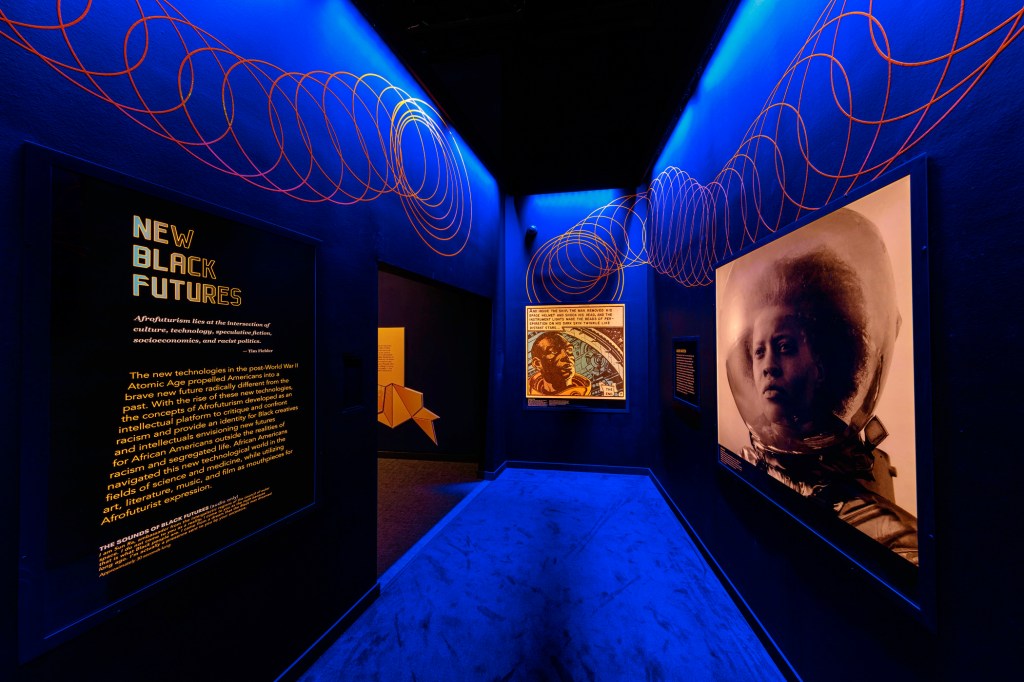
As Willams and his students continue to unravel the layers of her works, the journey through “Dawn” showcases the class’s commitment to dissecting the complex and transformative narratives woven by Octavia Butler. In the realm of Afrofuturism, “Dawn” and many of Butler’s other works stand as shining Afrofuturistic beacons. Williams explains that he has a broad view of what Afrofuturism means. With his expansive definition of the genre, he sees any extraordinary circumstance involving Black individuals as potentially fitting within the Afrofuturistic framework. He says the genre is a way for us to examine Blackness and the Black experience. That coupled with science-fiction tropes as seen in Butler’s novels, provides a unique perspective. Williams leaves us with one call to action: “Everybody should read some Octavia Butler.”
The threads of exploration and discovery, guided by the expertise of Williams, intertwine to create a learning environment that not only honors Butler’s legacy but also leaves an indelible mark on the evolving intellectual pursuits at Drexel. As the lessons of this course resonate, we find ourselves standing at the intersection of literature, education and visionary thought, ready to embark on new chapters inspired by the enduring influence of Octavia Butler.
Have you explored the realms of Afrofuturism through Octavia Butler’s visionary narratives? How has her work influenced your perspectives and reflections on literature and society? Let me know in the comments below!
 The Beginner's Guide to Afrofuturism
Leave a comment