
My recent visit to the National Museum of African American History and Culture’s (NMAAHC) “Afrofuturism: A History of Black Futures” exhibit is a mesmerizing journey through time, space and Black culture. With stunning visuals of Afrofuturism, it provides a sensory experience that leaves me in awe. Each step within the exhibit discloses a narrative that is both deeply rooted in history while simultaneously soaring toward the unknown.
I invite you to join me on a journey through the passageways of the NMAAHC, where the exhibit becomes so much more than a collection of artifacts. This is a living, breathing testimonial to the boundless possibilities of Afrofuturism. As we travel through this immersive experience, you’ll discover why this exhibit is a voyage every enthusiast of art, culture and the extraordinary should undertake. Let me guide you through the highlights that left a lasting impression on me and provide you with some helpful tips in case you decide to embark on the journey yourself.
Gateway to the Future
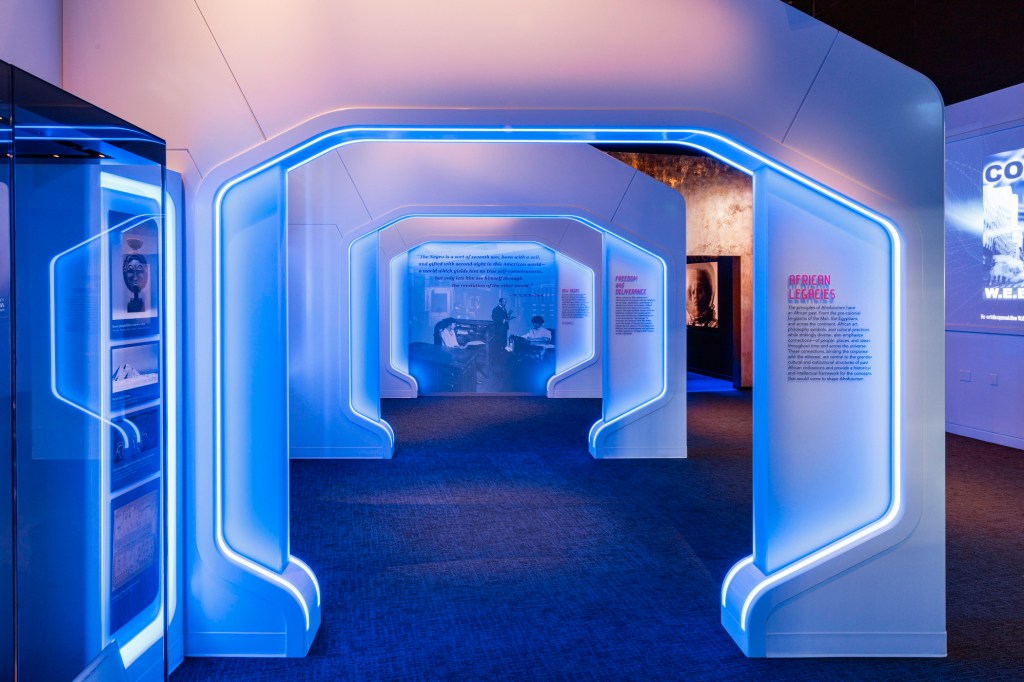
Photo Courtesy of Josh Weilepp/NMAAHC
Entering the exhibit, white structures with blue neon lights resembling the corridors of a spaceship line the room. They serve as physical markers and gateways inviting visitors to explore the rich stories of Afrofuturism. The neon lights cast an otherworldly glow and frame snippets of Afrofuturism’s history. A triple screen projection plays clips and interviews from pioneers like Mark Dery, Ytasha L. Womack, Alondra Nelson and George Clinton along with vibrant images encompassing the foundations of what Afrofuturism is all about. Next to them is inscribed a definition of Afrofuturism and this section sets the stage for the immersive journey ahead.
Tip 1: Embrace the unexpected. Use the exhibit’s app for an added dimension of submersion. Engage with it for additional insights in a hunt for clues format which begins just as you enter the museum by scanning the QR code. Even if you go without the app, consider it a treasure hunt regardless. Each artifact is a precious gem just waiting to be discovered.
Journeying Through Space
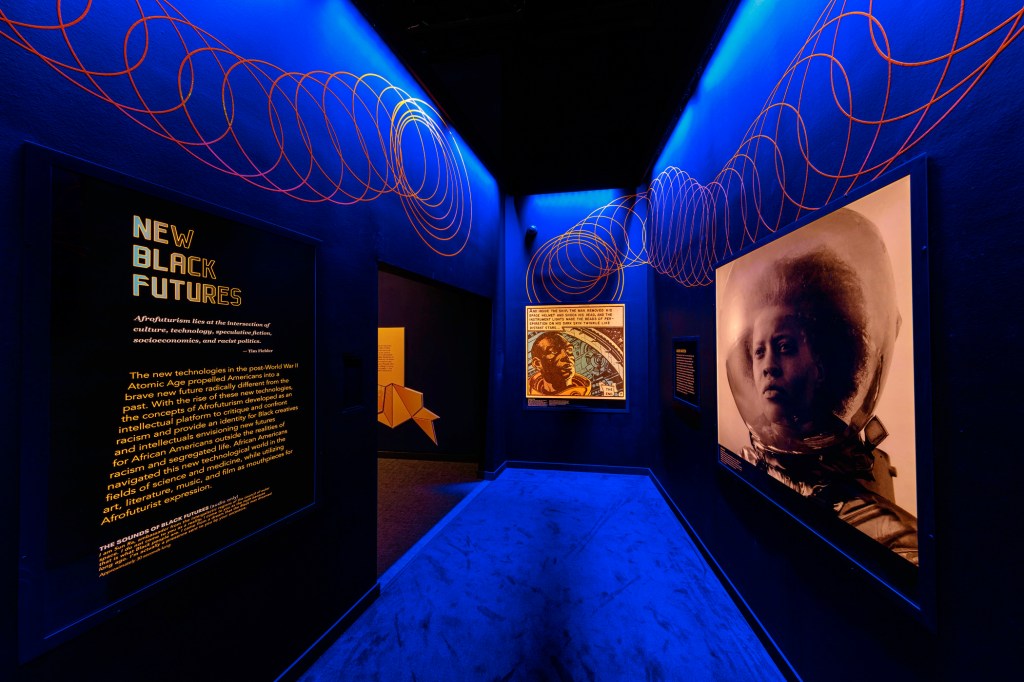
Photo Courtesy of Josh Weilepp/NMAAHC
The next section dedicated to space, transports me into the cosmic musings of Sun Ra. As his voice from “Space is the Place” reverberates through the iridescent room, I find myself surrounded by glowing futuristic circles and a plaque proclaiming “New Black Futures.” A comic book clipping featuring a Black man in space attire reads: “And inside the ship, the man removed his space helmet and shook his head, and the instrument lights made the beads of perspiration on his dark skin twinkle like distant stars.” A photo of a woman in an astronaut suit is placed adjacently with a plaque that says “Alien Nation.” As you leave the room and walk down the continued path, you see Octavia Butler’s typewriter and other foundational artifacts, connecting the tangible remnants of Afrofuturism’s genesis.
Tip 2: Listen and absorb. Take a moment to close your eyes and let Sun Ra’s voice encompass you. Allow the visuals to transport you into the mindset of Afrofuturism’s pioneers. Pay close attention to the artifacts that offer physical links to the movement’s roots.
Sonic Wonderland

Photo by Makayla White
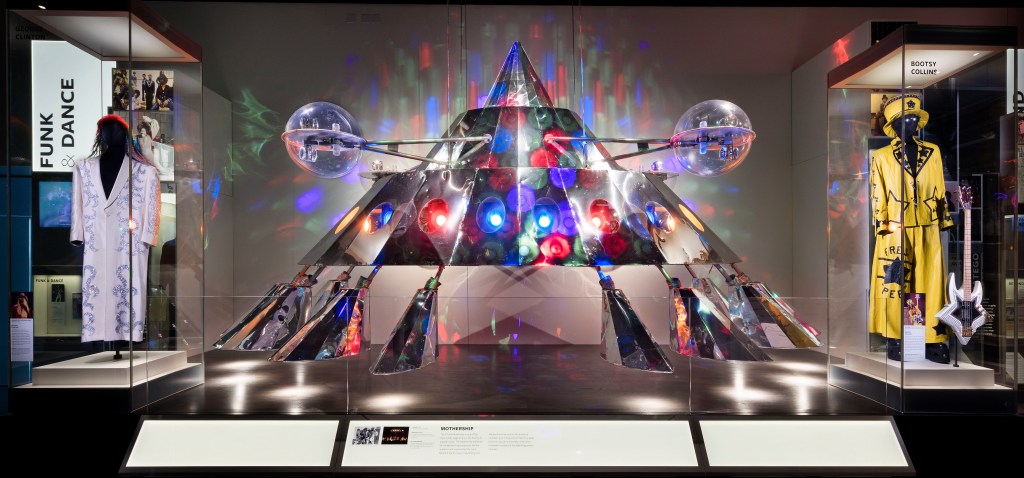
The path continues to undoubtedly my favorite, the music section which surrounds you in sound and memorabilia. The soul-stirring notes of Jimi Hendrix’s “Voodoo Child” and the futuristic beats of one of my favorite OutKast songs, “Prototype,” envelop the room. Giant screens play music videos paying homage to Afrofuturistic music from a multitude of decades. Iconic instruments and artifacts from musical legends like Prince, Missy Elliot, Erykah Badu, and Earth, Wind & Fire are featured here. It is a literal symphony of cultural celebration, and a harmonious blend of the past and present. This super sonic roundabout takes you through a musical exploration, dedicating entire casings to Sun Ra, OutKast and Parliament Funkadelic. A wall of Afrofuturistic album covers shoots up to the ceiling and the visual landscape of it all is truly a sight and feeling to behold.
Tip 3: Take your time. In the music section especially, enjoy the music and explore the artifacts displayed. Don’t rush. There is a lot to see and each note and artifact carries a piece of Afrofuturism’s essence.
Visual Art, Fashion and Stagecraft
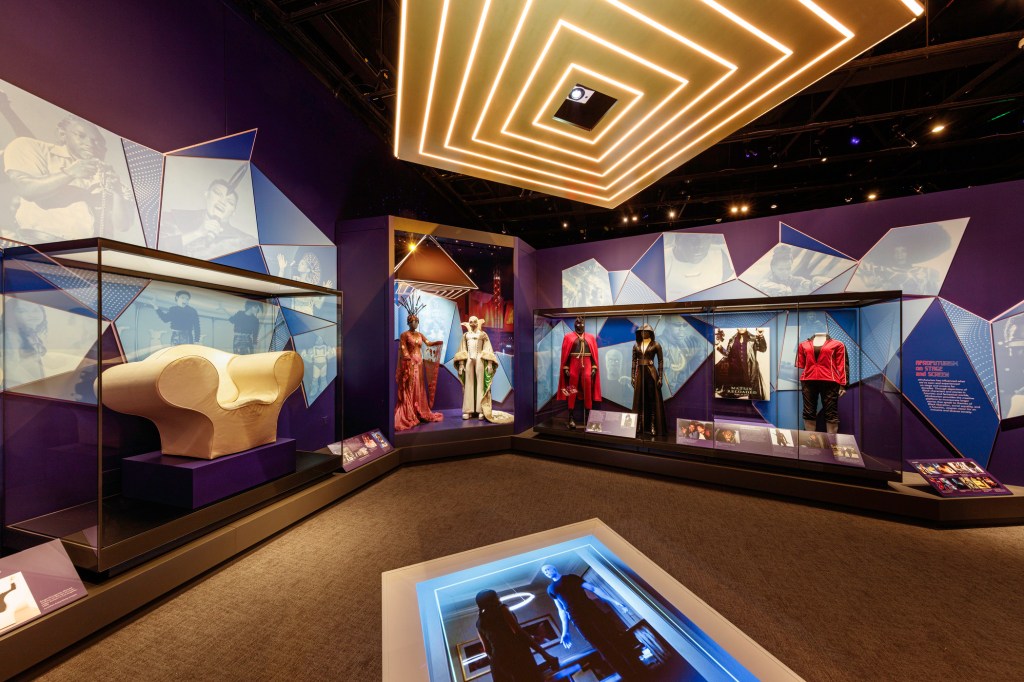
Photo Courtesy of Josh Weilepp/NMAAHC
The visual art and fashion section of this room feels like entering a dimension where creativity converges with craftsmanship. The space is a vibrant display of innovative design, cultural expression and a celebration of Black visionaries in the world of fashion. Iconic pieces from Black designers materialize miraculously on several screens. Notably, near this section, the exhibit has a curated collection of costumes worn by influential figures such as Janelle Monáe , George Clinton, Jimi Hendrix and Nona Hendryx. Each garment tells the story of their revered individuality and artistic innovation. Adding a touch of theatrical magic to this already enchanting space on the opposite side are the original costumes from “The Wiz” on Broadway.
Tip 4: Appreciate the little things. Examine the intricate details of the visual art and fashion pieces. Take note of the craftsmanship and the stories behind each one. Creativity and freedom of expression is vividly displayed in this section.
Afrofuturism on the Big and Small Screen

Photo Courtesy of Josh Weilepp/NMAAHC
A projection in the floor shuffles through iconic Afrofuturism moments in film and TV surrounded by memorabilia including the original white futuristic chair from Michael and Janet Jackson’s iconic “Scream” music video. Another iridescent room takes you to a large photo of Sun Ra while Whitey on the Moon by Gil Scott-Heron plays in the background. The plaque next to Ra of course proclaims that space is the place. As you continue, dancing specks of light resembling stars, cover the floor and walls. If you look down, you can see them dancing on you too. Photos of Black astronauts and Uhura’s actual spacesuit from Star Trek keep with the space theme. Moving along, cultural movements like Black Lives Matter are highlighted until you get to another one of the most impactful pieces in the exhibit, Chadwick Boseman’s Black Panther suit (cue the tears). This section is by no coincidence one of the last you come to in the exhibit.
Tip 5: Allow yourself to be immersed. Feel free to suspend reality and embrace the boundless imagination of Afrofuturism. Let the lights (and app if you so choose) guide you through the journey of Afrofuturism. The exhibit’s layout is intentional, creating a narrative that builds as you progress.
Why You Should Visit
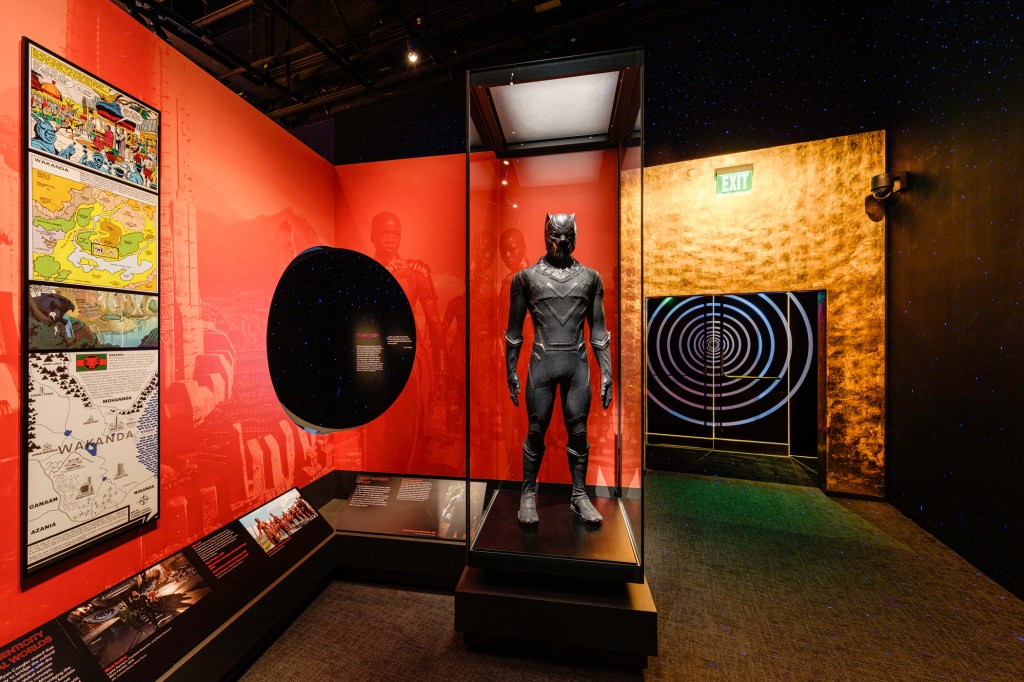
Photo Courtesy of Josh Weilepp/NMAAHC
Visiting A History of Black Futures is an opportunity to explore narratives that are often overlooked in mainstream history and immerse yourself in Afrofuturism and all its glory. The NMAAHC always does a great job of providing a platform to celebrate Black contributions to art, film, music, literature and so much more and this exhibit is no different. It also offers a tangible connection to the roots of Afrofuturism, allowing a glimpse into the evolution of the movement and its profound impact on the culture. As you navigate through the meticulously designed space, you’ll find yourself in a world of wonder.
Tip 6: Acknowledge passing through the golden exit. The exit is not just a physical departure but a symbolic transition. As you walk through it, reflect on your journey. This, in many ways, can be a personal transcendence, beckoning all who enter to embark on a path of self-discovery.
Cosmic Treasures
As I exit the exhibit, the golden surroundings aptly encapsulate my feelings. “Afrofuturism: A History of Black Futures” is a treasure trove of wonder and a visit to this exhibit is certainly a trip worth taking. It’s an immersive experience that educates and inspires, inviting everyone to envision a future where creativity knows no bounds.
This was my second visit to the exhibit and each time I am filled with such profound emotion; joy, pride, sorrow and excitement to name a few. This is a must-visit for anyone eager to explore the intersection of Black culture, history and the limitless possibilities of the future. Make sure to plan your visit and get your tickets ahead of time (especially in the summer!). The NMAAHC has several floors of wonderfully transformative exhibitions to explore outside of this one, and if you can’t make it to Washington D.C., don’t fret! Their online version still provides a worthy trajectory through the exhibits’ fundamental elements.
If you have been to the exhibit or explored its online presence, how has this immersive experience expanded your understanding of Afrofuturism? Let me know in the comments below!
Images courtesy of the Smithsonian Institution National Museum of African American History and Culture, Photography by Josh Weilepp.

 The Beginner's Guide to Afrofuturism
Leave a comment