
Stepping into Jean-Michel Basquiat’s “King Pleasure” exhibit is like diving headfirst into a whirlpool of colors, emotions and history. According to his estate, they organized and curated over 200 never-before-seen and rarely shown paintings, drawings, multimedia presentations, ephemera and artifacts. I was fortunate enough to visit the exhibit during the summer of 2022 in New York, and the Los Angeles portion of the exhibit’s tour just ended in late 2023. This intimate perspective is shared through the lens of his family – intertwining his artistic endeavors with his personal life, influences and the times in which he lived. Let me share with you my vibrant journey into the soul of an avant-garde legend whose brushstrokes feel as alive today as they did in the pulsating art scene of the 1980s.
Basquiat Energy
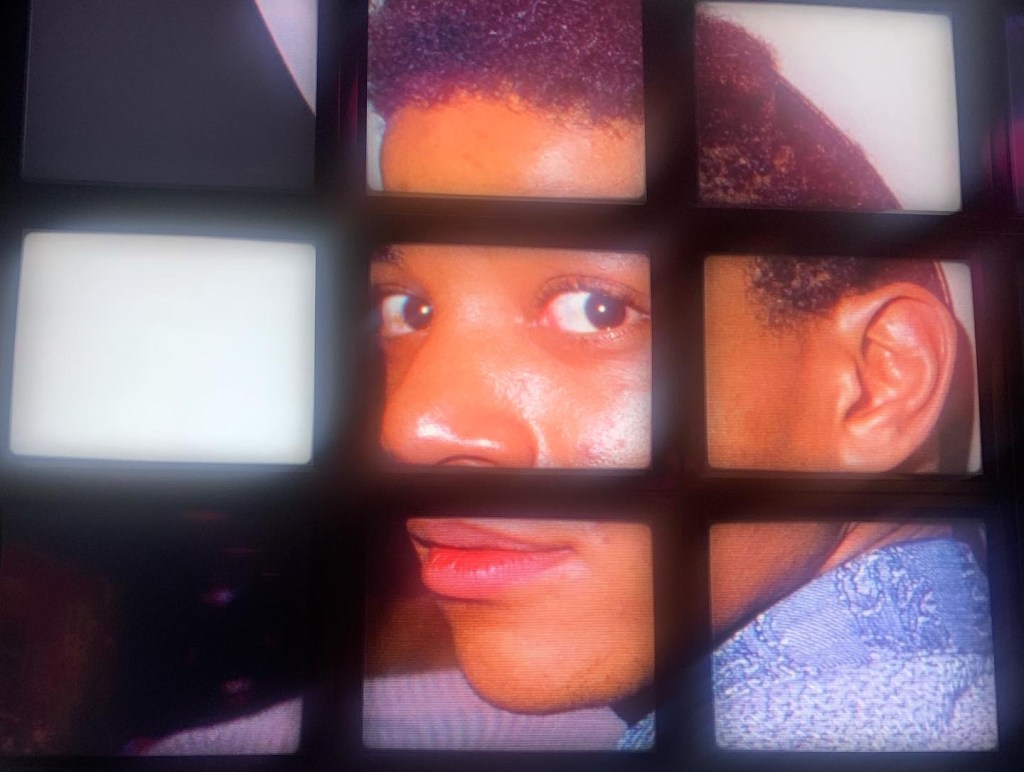
Photo by Makayla White
From the moment you enter, giant photographs of him and his work set the scene for a breathtaking voyage. Visitors snap pictures alongside his photographs to document their arrival and the air seems to buzz with electric energy and excitement. The anticipation to get a sneak peek into his world is palpable. Entering the exhibit, you can feel the love and deep respect that went into the curation of his masterpieces. Each room unfolds like an unknown chapter of his life, with stories told through paint and various canvases. Each piece feels like a gateway into the maze of his brilliant mind.
The colors themselves, signature to Basquiat, leap off the walls as a daring, unapologetic and defiant riot against the mundanity and triviality of life. Basquiat’s signature symbols like the crown, cryptic texts and haunting figures dance across the surfaces, always seemingly challenging you to decode the messages woven into each stroke. Many of his works are untitled, adding to the level of mystery and prompting further interpretation. As you meander through the exhibit, you stumble upon fragments of his life—notebooks brimming with raw sketches and thoughts, handwritten notes, candid photos with friends and icons, videos of him with his family as a child and even the legendary SAMO tags that marked the dawn of his explosive career.
Some of my favorite pieces include “Riding With Death,” which depicts a man riding a skeleton and according to his website is one of his later works. This painting is often interpreted as a reflection on his own mortality and legacy. Another favorite is “Untitled (Head)” from 1982 which coincides with Basquiat’s habit of drawing heads and skulls. According to Fred Hoffman, an author who met Basquiat and curated several of his exhibits, “What drew Basquiat almost obsessively to the depiction of the human head was his fascination with the face as a passageway from exterior physical presence into the hidden realities of man’s psychological and mental realms…they not only peer out as if seeing but also invite the viewer to penetrate within. “Hollywood Africans” is another standout for its vibrant color and social commentary about the stereotyping and marginalization of Black Americans in the entertainment industry. With inscriptions such as “Gangsterism,” “Sugar Cane” and “Tobacco,” Basquiat critiques the commodification of Black culture and the limited roles available to Black actors, highlighting the struggle for representation and dignity.
Life Through Art
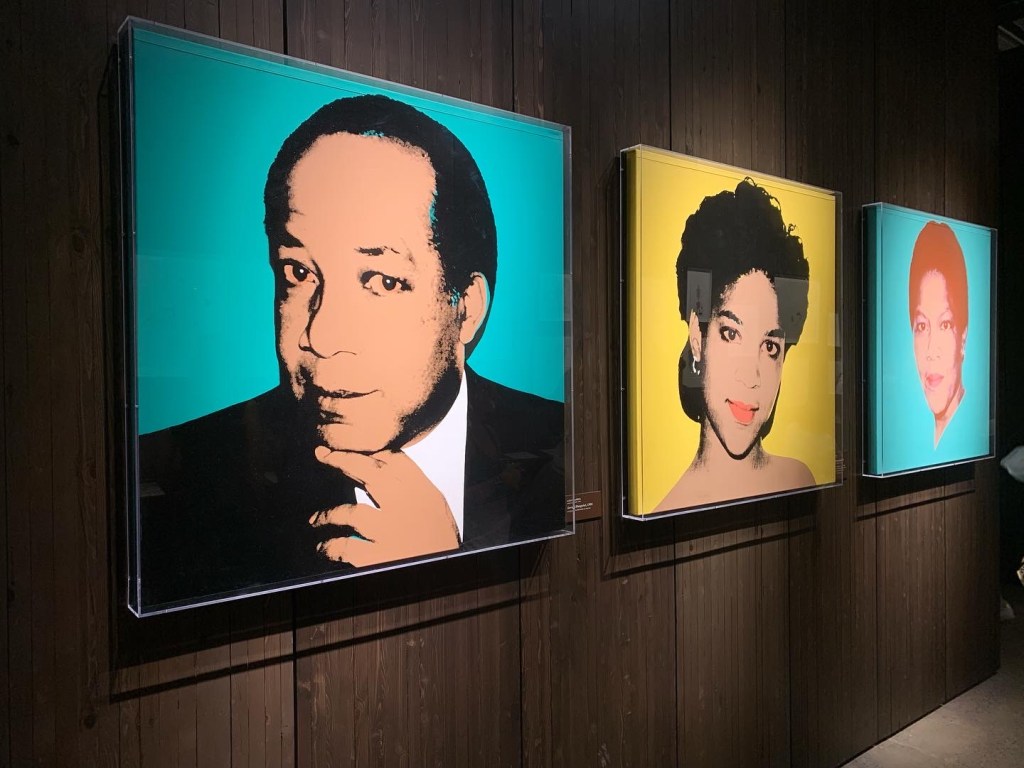
Photo by Makayla White
There are so many of his paintings and drawings in the exhibit on a vast array of canvases from paper and traditional canvas to unconventional renditions on wooden pallets, fences and even a refrigerator door. The art itself ranges from simple drawings and sketches and small to medium artworks, to much larger and more elaborate pieces. Portraits of Basquiat’s family members created by his longtime friend Andy Warhol grace the walls. Interviews with his sisters Lisane and Jeanine Basquiat, who played a major role in curating the exhibit, play on several screens along with interviews with other family members, artists and friends who knew him. His art studio and family’s living room and dining room are also recreated to look just as they did when Basquiat was alive. These intimate glimpses offer a tender look at the man behind the legend and due to his premature death, the subsequent myth.
At the end of the exhibit is a plaque expressing how Basquiat loved to party and was a big part of the club scene in New York. It explains that he used clubs for partying and escapism, but also for connection. The last excerpt of the plaque reads: “New York in the 1980s reminds one of the moments you walked into a dark room filled with pumping music and dancing people. Any weight of the world would fall away once you joined in – and everyone would party the entire night in celebration of life.” I would say that the exhibit is just that, a celebration of Basquiat’s life, and this club-themed room was a fitting close to the festivities. You can still listen to Spotify’s curated playlist for the exhibit which includes songs Basquiat would have listened to during 1980s nightlife.
Static photos of Basquiat and Andy Warhol out and about in the New York club scene are displayed as loud pulsating house music engulfs the room, and it’s as if you’re partying right alongside them. A large display made of 30 small screens flits between images of Basquiat, Warhol and others in the 1980s club scene. Lounge chairs, tables, drapes, mirrors, chic chandeliers and candelabras line the room and most visitors, me included, sit and enjoy the ambiance for a while. One of the largest works, another one of my favorites, is also placed here depicting a painting that looks like a Chinese New Year dragon lantern surrounded by a collage of smaller drawings. Reaching the end of the exhibit, I’m left with a swirling mix of emotions—awe at Basquiat’s meteoric rise and the sheer force of his talent, sadness for his all-too-brief journey and a deep appreciation for the mark he left on me and the world.
Tokens From Basquiat
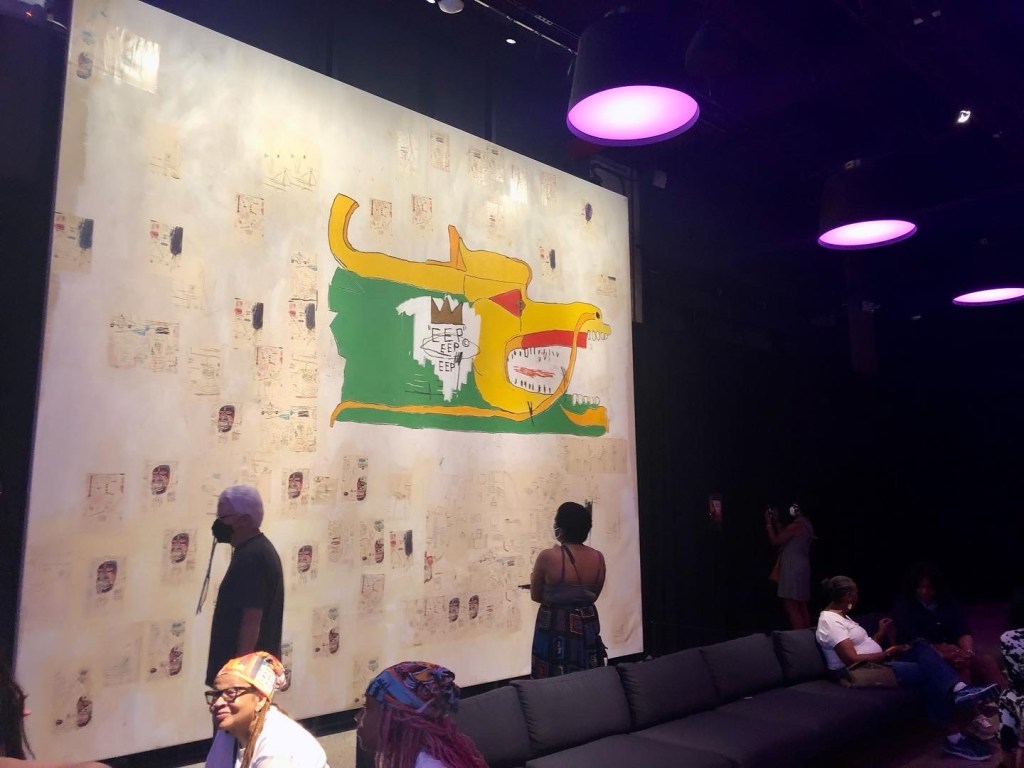
Photo by Rutha Howard
As I leave the exhibit and step back into the daylight, the world seems a little brighter, a little more vivid and I’m a little more appreciative of it as seen through Basquiat’s eyes. The vibrancy of his work lingers long after the last painting fades from view. I still carry with me not just the memories of the exhibition, but the exhilarating sensation of having connected, even if just for a moment, with the boundless spirit of Jean-Michel Basquiat. “King Pleasure” is a vibrant celebration of Basquiat’s life, his relentless passion and the brilliance that continues to inspire and captivate hearts and minds around the globe today. It’s more than a display of genius; it’s an intimate invitation into Basquiat’s universe. It’s an experience that echoes after you’ve left, and a vivid reminder to challenge and celebrate the complexity of our collective human experience.
I have been a fan of Basquiat for a while now, and there is something truly special about being in such close proximity to a vast number of his works combined with the transient nature of the exhibit. It’s like you can almost touch him, almost see his very essence and just like that he’s gone yet somehow remains omnipresent. I still cherish my souvenir tokens from the exhibit: a book featuring his artwork, a “Hollywood Africans” notebook, a bracelet adorned with tiny crowns and a fridge magnet created from a note he left on a fridge that reads: “Out getting ribs, JM.” I’m still collecting and admiring pieces of him; a few Basquiat clothing items, art prints and a Funko Pop figure more recently, but nothing will quite compare to the experience of seeing his work in the flesh and gazing upon the physical legacy of this iconic mastermind.
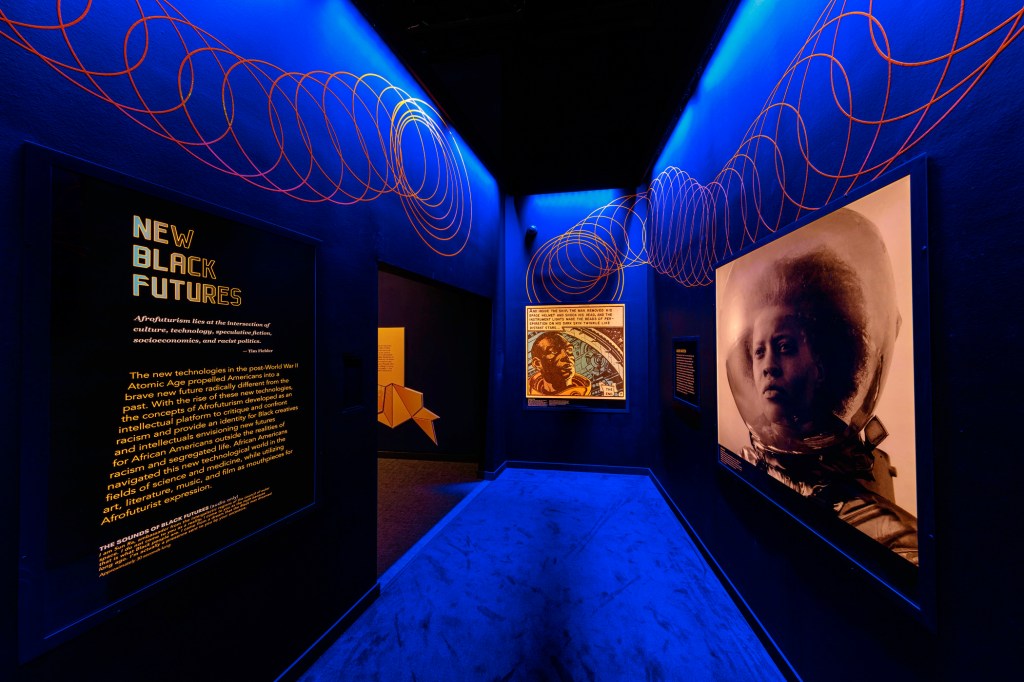
Bold Strokes of Afrofuturism
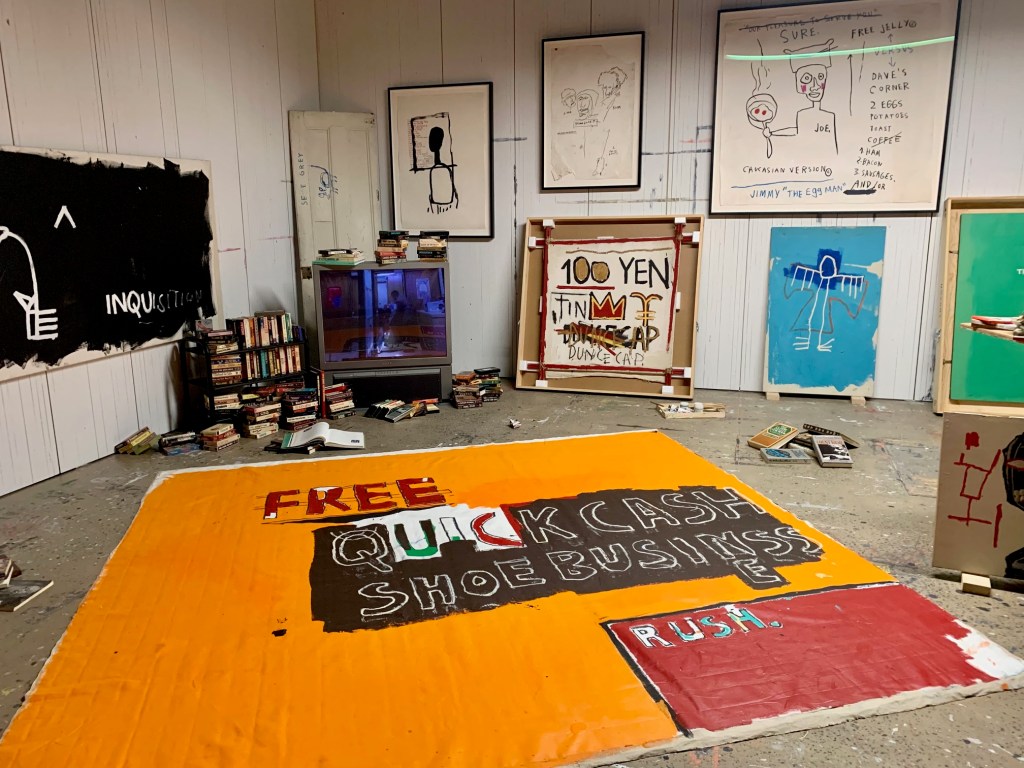
Photo by Makayla White
The exhibit masterfully peels back the layers of Basquiat’s influences and the recurring themes that dominate his work. His heritage, and his bold commentary on race, power, identity and societal injustices are all laid bare, a tribute to Basquiat’s enduring role as a provocateur, an artist who quite frankly wielded his canvas as a weapon against complacency. His work speaks volumes about his experience as a Black artist in a predominantly white art world and delves into the African diaspora, colonialism and the socio-political struggles faced by Black Americans.
Afrofuturism finds a unique resonance in Basquiat’s art. His pieces often serve as a bridge, linking the past and a hopeful vision of what could be. Through his art, he confronts the harsh realities of racial injustice and inequality, while simultaneously offering a vision of empowerment and transcendence. His use of symbols, from crowns signifying regality and strength to coded words hinting at hidden meanings and ancient wisdom, speaks to a present where we can reclaim our own narratives in the world’s history and future.
Basquiat’s work can be seen as a precursor to Afrofuturism’s core themes. His paintings are historically a rebellion against the erasure of Black history, and a fervently bold declaration of the significance of Black lives and futures. I’m not sure when or if the “King Pleasure” exhibit is coming back for another tour, but Artefuse Magazine has a great walk-through video of the exhibit that you should definitely check out to get a glimpse into the experience.
Enduring Influence
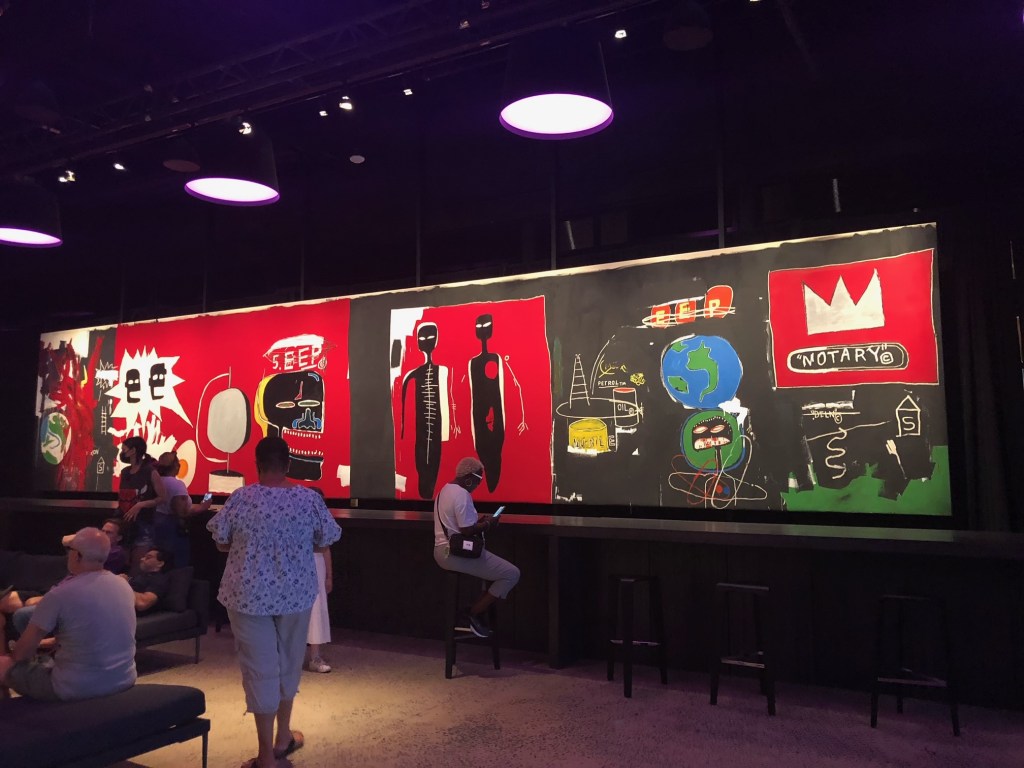
Photo by Makayla White
Basquiat’s art, in tandem with its raw emotion, complex symbols and unapologetic social commentary, goes beyond the confines of time. His works act as a mirror reflecting the complex nature of society, the struggles of those who are marginalized and the relentless pursuit of one’s identity and belonging. In an era where conversations around race, inequality and justice are more prevalent than ever, Basquiat’s voice remains both visionary and relevant. His canvases are not just paintings; they are battle cries, love letters and visions of a world yet to be. In a PBS interview, his sister Lisane explains the mission: “This exhibition is really about bringing people into the man that Jean-Michel was and really drawing people into his voice.”
Moreover, Basquiat’s influence extends far beyond the art world. He has become an icon of creativity and a symbol of the relentless pursuit of expression against all odds. His fusion of text, images and historical references continues to inspire a new generation of artists, musicians, writers and thinkers who see in Basquiat a kindred spirit—a trailblazer who carved a path through the wilderness of the mainstream art world with boldness and authenticity. Through “King Pleasure” we are reminded of the power of art to provoke thought, evoke emotion and drive societal change, encapsulating Basquiat’s legacy as a beacon of Afrofuturism, creativity and resilience.
How has Jean-Michel Basquiat’s work inspired or challenged your understanding of art’s role in society? What do you believe is the most significant aspect of his legacy that continues to influence today’s world? Let me know in the comments below!
 The Beginner's Guide to Afrofuturism
Leave a comment