
If you’re ready to venture into the boundless realms where ancient traditions meet futuristic imaginings, then fasten your seatbelts. We’re about to embark on a cinematic odyssey through Afrofuturism, a genre that transcends time and space, weaving through tales that resonate with the soul. Here are 10 essential Afrofuturist films that deserve a spot on your watchlist:
1. Sun Ra’s Space is the Place (1974)
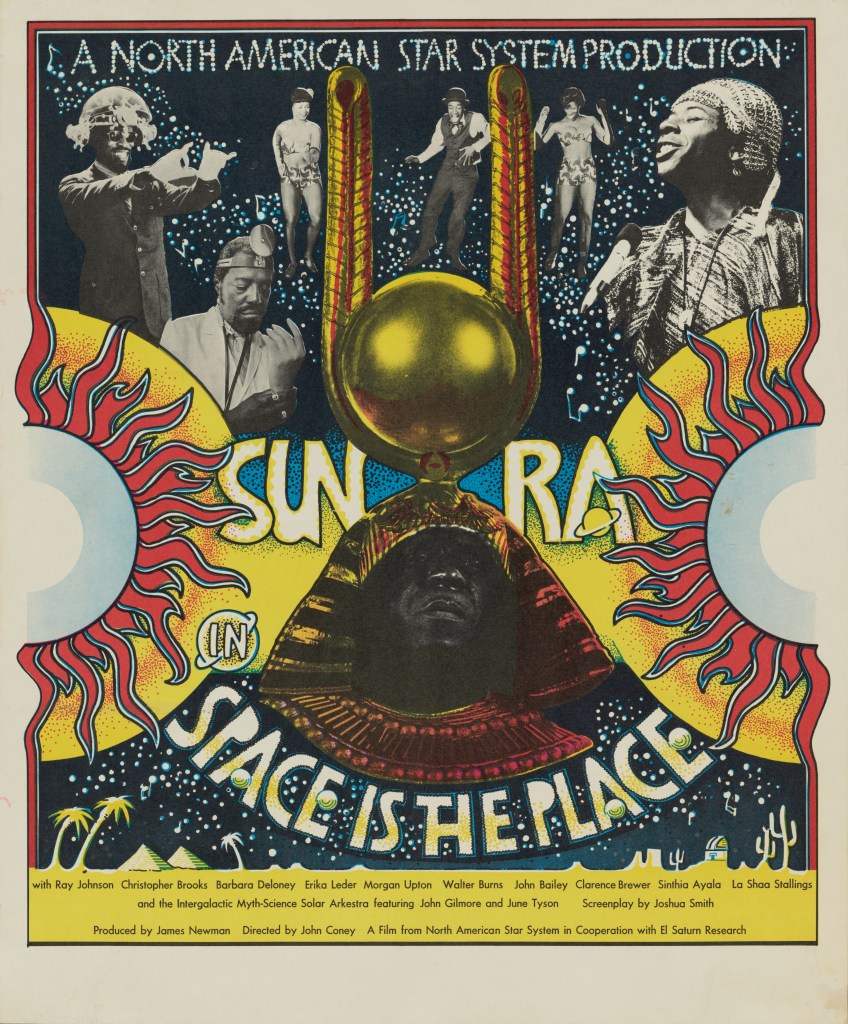
Photo Courtesy of NMAAHC
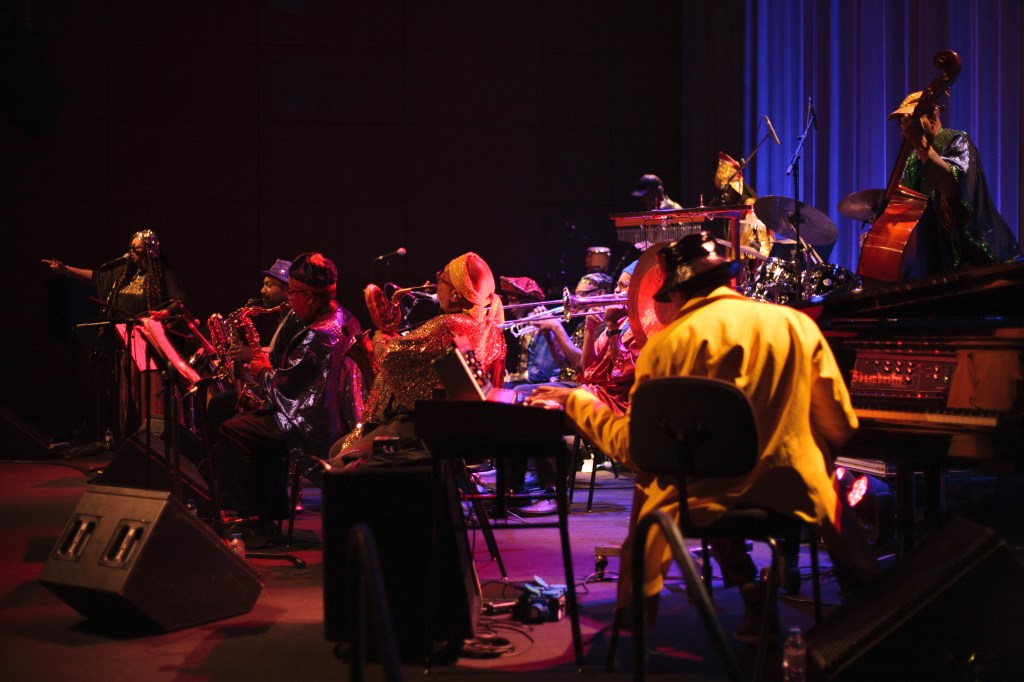
I would be remiss if I didn’t mention this iconic 1974 film featuring legendary jazz musician and one of the major pioneers of Afrofuturism, Sun Ra. “Space is the Place” follows Sun Ra’s journey to save Black Americans from the struggles of Earth by creating a utopian society on another planet. In an intergalactic battle he fights an overlord a.k.a. The Overseer for the souls of Black folk during his journey. He’s of course, traveling with his intergalactic space companions and band, the Arkestra. They’re decked out in Egyptian and Afrofuturistic space attire which is not far off from their usual band gear. You can hear their signature sound and lyrics throughout the film and in the accompanying soundtrack.
Fittingly, the ultimate showdown occurs at a concert venue while Sun Ra and the Arkestra are performing. There are so many glorious moments and motifs within this film. It’s groovy, it’s cool, it’s space age, it’s the 70s and Sun Ra through and through. From Sun Ra’s stellar spaceship landing on planet earth to his profound explanation of why Black people are myths, it is an Afrofuturism essential and classic. If you want to learn more about Sun Ra, make sure to check out my “Chasing Sun Ra Part One” post.
2. Black Panther (2018)
What would Afrofuturism be today without “Black Panther?” This comic book series turned film adaptation broke numerous box office records and introduced millions of people to the genre of Afrofuturism, while simultaneously grossing more than $1 billion worldwide at the time of its release. Directed and co-written by Ryan Coogler, it stands as a cultural phenomenon and an endearing celebration of Afrofuturism. Set in the technologically advanced and culturally rich nation of Wakanda, this film is not merely a superhero saga; it’s a profound exploration of identity, power and the consequences of isolationism.
With its visually stunning Afrofuturistic aesthetic, thanks in large part to Ruth E. Carter’s costume design, Black Panther not only entertained global audiences but also became an extremely notable symbol of empowerment. Couple that with the sequel, “Black Panther: Wakanda Forever,” and this is a dynamic duo that has catapulted into the Afrofuturism Hall of Fame and will certainly continue to influence current and future generations. This film is always worth a revisit and songs from the phenomenal Cali-influenced soundtrack created by Kendrick Lamar still have a spot on my playlist.
3. The Wiz (1978)
Probably one of the first Afrofuturist films and musicals I was ever introduced to, “The Wiz” brings forth copious amounts of nostalgia. I literally cannot watch this film without singing along. “The Wiz” is a dazzling reinterpretation of the classic “Wizard of Oz,” infused with the vibrancy of Black culture. The dance numbers are derivative of modern dance and traditional African forms elevating this work into a magical spectacle. Complete with a star-studded cast, Diana Ross, Michael Jackson, Lena Horne, Richard Pryor and so many others are beyond amazing in this film. This musical extravaganza transports us to the magical land of Oz, where the familiar tale takes on new life.
The mysticism is prominent throughout this film in addition to several other Afrofuturistic themes that extend beyond the witches and the wizard. The costumes are works of art in their own right and Afrofuturist couture tbh, from the introduction of Miss One and the graffiti children to the dancers and musicians whose outfits change color when the Wizard of Oz himself commands. “The Wiz” is a celebration of diversity and a timeless exploration of what it means to persevere and break free of both social and individual constructs. Over 40 years later it still inspires viewers to believe in themselves during times of hardship and dare to exist outside of the confines of conventional space and time.
4. Get Out (2017)
“Get Out,” the breakout film by one of my favorite filmmakers, Jordan Peele, is part of several of his films that fall under the umbrella of new Black horror and Afrofuturism as well. In this thought-provoking film, a Black man’s visit to his white girlfriend’s family estate unravels some seriously disturbing secrets. I remember seeing this movie in theaters and the reactions from the crowd were a testament to not only the talented actors but Peele’s directorial finesse. The laughs, audible gasps and cheers throughout the movie were an accurate depiction of the roller coaster of emotions this film takes you on.
It is a psychological thriller that skillfully blends horror and astute social commentary. “Get Out” is eerie to say the least and exacerbates the often strange sci-fi like experiences that Black Americans endure IRL on a daily basis. The film also stars Daniel Kaluuya and Lakeith Stanfield who play prominent roles in other standout Afrofuturist works like “Black Panther” and Donald Glover’s “Atlanta,” respectively. “Get Out” goes far beyond traditional horror tropes, addressing deep-rooted racial issues with a narrative that is as gripping as it is socially relevant. A unique blend of sci-fi, horror and Afrofuturism, this film is still one for the books.
5. Sorry to Bother You (2018)
“Sorry to Bother You,” takes us on a surreal and satirical journey through an alternate present-day Oakland. The film follows a telemarketer Cassius Green, played by Lakeith Stanfield, who discovers a pretty bizarre secret to success. In a bout to end his bad luck with customers hanging up on him as soon as he utters the words “sorry to bother you,” he asks his coworker Langston, played by Danny Glover, for help. Langston tells him he has to use his “white voice” in order to get callers to stay on the phone. He explains that in order to be believable, Cassius has to act like he doesn’t have a care in the world and like he’s happy about his future. Cue one of many tip offs to Afrofuturism.
This method works so well that Cassius gets a promotion and finally gets to go into the Afrofuturistic-themed elevator that leads to the land of elite Power Callers, but all this success makes him lose himself in the process. Tessa Thompson plays Detroit, Cassius’ girlfriend, and she is my absolute favorite character in this film. Pay close attention to her Afropunk and Afrofuturistic aesthetic, especially her earrings and outfits, as well as the decor throughout the film. In true Afrofuturist fashion, the plot and cinematography is endearingly allusive and the social commentary is off the charts.
6. Sun Ra: A Joyful Noise (1980)
Sun Ra, the man, the myth, the legend graces the documentary “Sun Ra: A Joyful Noise” with philosophical words of wisdom intertwined with musical excerpts of performances with the Arkestra. For those intrigued by the enigmatic Sun Ra, this film serves as a documentary that transcends mere biographical storytelling. The film provides an intimate glimpse into the life and cosmic ideology of the visionary jazz musician and band. They travel from Philadelphia to Baltimore and Washington, D.C, making several stops along the way. One of the stops being Sun Ra’s residence at the time in Philly’s Germantown. We get to meet Sun Ra’s saxophonist and the owner of the Pharaoh’s Den grocery store, Danny Thompson, and several other prominent band members including current band leader, Marshall Allen.
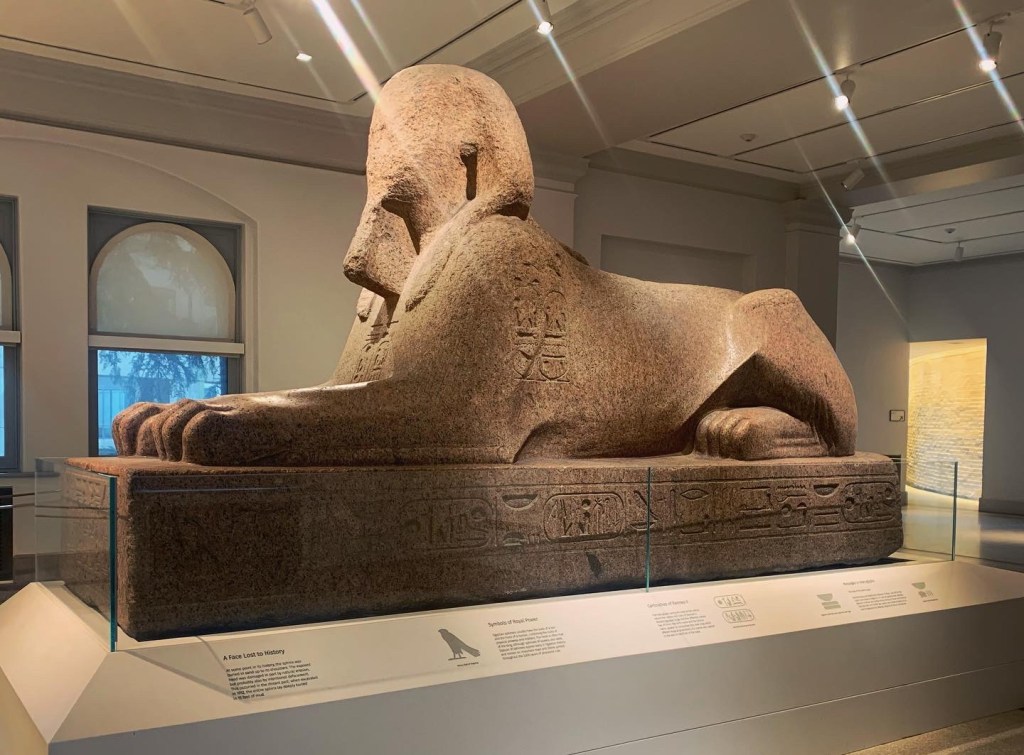
Sun Ra is also pictured throughout the film in the Penn Museum’s “Ancient Egypt and Nubia” exhibit which is still on view today. You can tell that the members of the Arkestra are driven and truly believe in Sun Ra’s vision. His ability to influence and inspire as a band leader is on full display here. Through the kaleidoscopic lens of music, “Sun Ra: A Joyful Noise” is a celebration of Sun Ra’s genius, offering a reverently eclectic and highly personal perspective on Afrofuturism in the realm of sound, sprinkled with Sun Ra’s revelations about life, music and the Black experience.
7. Blade (1998)
“Blade,” similar to Black Panther, is a hybrid of Afrofuturism and the superhero genre adapted into a film from Marvel’s original comics. Starring Wesley Snipes as the half-vampire, half-human vampire hunter, the film delves into recurring themes of identity and belonging. The movie not only breaks new ground in the realm of comic book adaptations but also stands as a trailblazer in incorporating Afrofuturistic elements into the narrative fabric of a superhero saga. Fair warning, “Blade” is not for the faint of heart lol.
There is blood and gore aplenty, but can we expect anything less from a vampire-superhero movie? Wesley Snipes as Blade is reminiscent of Morpheus from the Matrix, complete with a black trench coat and some of the same futuristic fighting moves. He is the epitome of cool, wears all black, drives a vintage Dodge Charger and carries an arsenal of weapons (primarily silver bullets and spikes) to fight said vampires. This movie is dark in both subject matter and aesthetics, and it is unapologetically so grunge and so 90s. You’ll really need to strap in for this one to follow the vampire killer on a journey to fight a vampire apocalypse in order to save humanity and himself.
8. They Cloned Tyrone (2023)
“They Cloned Tyrone” utilizes a narrative that combines science fiction and Afrofuturistic elements, inviting audiences to embark on a journey far beyond the conventional. The very act of cloning, a concept that blurs the lines between science and morality, sets the stage for a narrative that promises to be as thought-provoking as it is thrilling. John Boyega, who stars in several Star Wars films, along with Jamie Foxx and Teyonah Parris make a killer synergistic cast. Afrofuturism finds yet another new canvas in “They Cloned Tyrone” and it is such a fun and wild ride. Although the film is set in the present day, there are many elements throughout that are reminiscent of the 70s Blaxploitation Era and the 90s.
The time period confusion is intentional, and it makes you feel like you are in the Twilight Zone right along with the cast. The film’s mysterious nature only adds to its allure, hinting at a story that may challenge our understanding of identity, ethics and the consequences of technological advancements, especially on underprivileged persons. Juel Taylor’s directorial vision, coupled with Ryan Coogler’s expertise in producing groundbreaking narratives, leaves an infectious mark on the ever-expanding landscape of Afrofuturist storytelling. Get ready to be immersed in a narrative that transcends time, space and the very essence of what it means to be human.
9. Fast Color (2018)
“Fast Color” is an Afrofuturistic gem that’s as mesmerizing as it is thrilling. It’s the kind of movie that grabs you from the first scene and refuses to let go. Ruth, the protagonist, is on the run, trying to evade capture, but this isn’t your typical chase. Ruth’s family has unique gifts – they can dismantle and reconstruct objects at will with their minds. They inherited the ability to take things apart down to a molecular level and put them back together. If that’s not mind-bending enough, they can also see colors that nobody else can see once the objects are restored, hence the name “Fast Color.” Talk about powers beyond imagination.
As Ruth grapples with her abilities and her checkered past, she discovers that seizures give her the power to shift tectonic plates which could potentially alternate Earth’s energy. This is a film filled with mystery, intrigue and a hefty dose of good ol’ mysticism, but what sets “Fast Color” apart isn’t just its mind-bending plot. It’s the way it weaves together themes of family, identity and resilience opposite a world that always seems to be on the brink of collapse. Lorraine Toussaint plays Ruth’s mother and she is always a force to be reckoned with in every role I’ve seen her in. The visuals are stunning, the performances are captivating and the message is clear – sometimes, the greatest power we possess is the strength to embrace who we truly are.
10. Beasts of the Southern Wild (2012)
In “Beasts of the Southern Wild,” reality blurs with fantasy and every frame feels like a painting come to life. The film is set against the backdrop of what looks like a post-apocalyptic town near a bayou that the residents have coined the Bathtub. It tells the story of a community fighting to survive in the face of overwhelming odds from poverty, to tropical storms and the beasts, of course. They eke out a living by the water, relying on land and sea to sustain them, but their way of life is threatened by outside forces who seek to impose their will and strip away their autonomy. At the center of it all is Hushpuppy, a six-year-old girl wise beyond her years, who must navigate the complexities of growing up in a world that’s as beautiful as it is harsh. Her mother left long ago and she only has the community of the Bathtub and her at times volatile father by her side.
It’s unclear at many points if they can weather the storm that hits their lives and homes. From the moment the film begins, you’re drawn into sights and sounds that feel both familiar and otherworldly. The cinematography is nothing short of breathtaking, capturing the raw beauty of the bayou with an intimacy that’s rarely seen on screen. The actors embody their roles with such authenticity that you forget you’re watching a movie. You feel like you’re right there with them, navigating the challenges of life on the edge of the world. I love NPR’s review of this work: “Tricked out in a palette of rich browns and oranges, the film is a mesmerizing hellhole of magical realism, complete with a pack of wild beasts played by local hogs in headdresses, who may turn out to be friend or foe.” Hushpuppy’s journey is a testament to the resilience of the human spirit and the power of community to overcome adversity. Fair warning: this one is a tear-jerker.
These 10 essential Afrofuturist films showcase the diversity and richness of the genre, ranging from space operas and superhero adventures to satirical comedies and musical fantasies. Embarking on a personal odyssey through these films is always a transformative experience. Each cinematic masterpiece invites us to explore the infinite possibilities that Afrofuturism offers—challenging our perceptions, celebrating diversity and ultimately reshaping the way we envision our own futures.
As these films continue to resonate, they guide us toward a universe where storytelling becomes a powerful tool for introspection, empowerment and societal transformation. So, grab your favorite movie snack, immerse yourself in these cinematic wonders and let the boundless imagination of Afrofuturism redefine your own cinematic universe. Happy watching, travelers!
Are there any films you’d personally add to this list? Please illuminate me with your cinematic gems and let me know in the comments below!
 The Beginner's Guide to Afrofuturism
Leave a comment