Greetings, travelers! Embarking on a journey through Afrofuturism feels like traveling through a cosmic tapestry, where culture, creativity and limitless possibilities intertwine. Coined by cultural critic Mark Dery in 1993, Afrofuturism stands as a unique lens through which artists reimagine narratives, challenge historical norms and envision futures where marginalized voices not only persist but thrive.
It is so much easier said than done to define this term that has transformed into a wonderfully expansive genre and philosophy. While defining Afrofuturism is no easy feat, together, let’s delve into the nuances of this concept, drawing inspiration from the luminaries who have paved the way. Allow me to share my exploration of this expansive genre and attempt to unravel the burning question: What is Afrofuturism?
Defining Afrofuturism
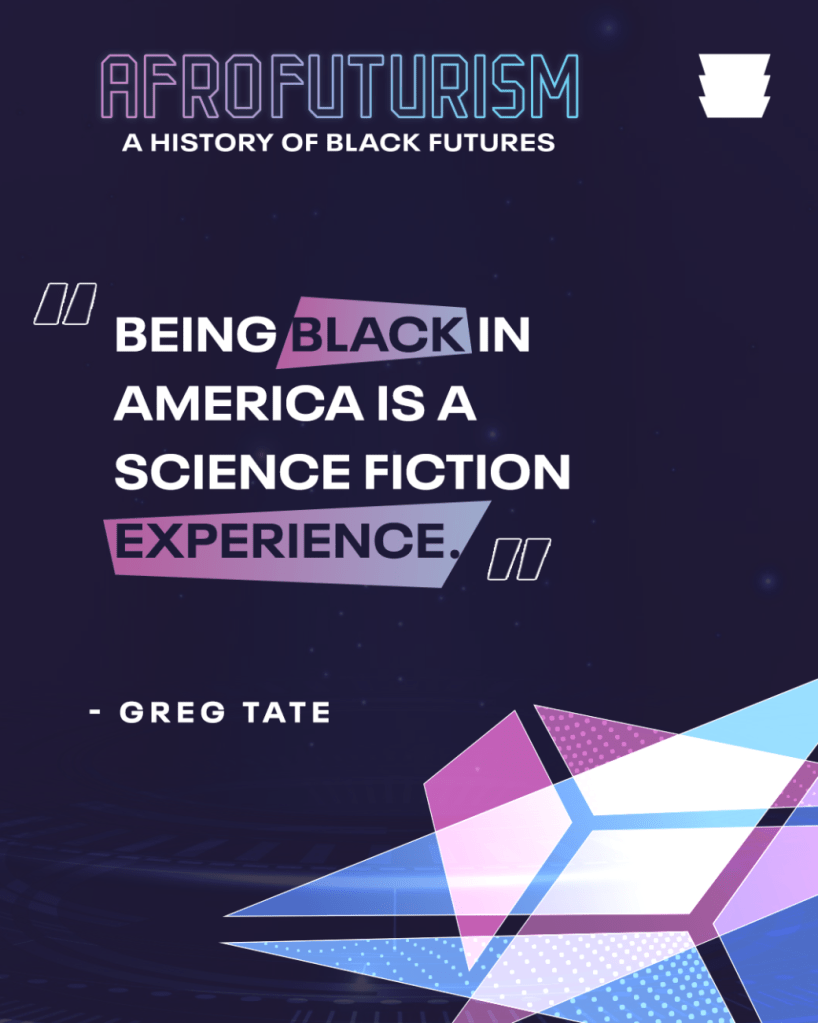
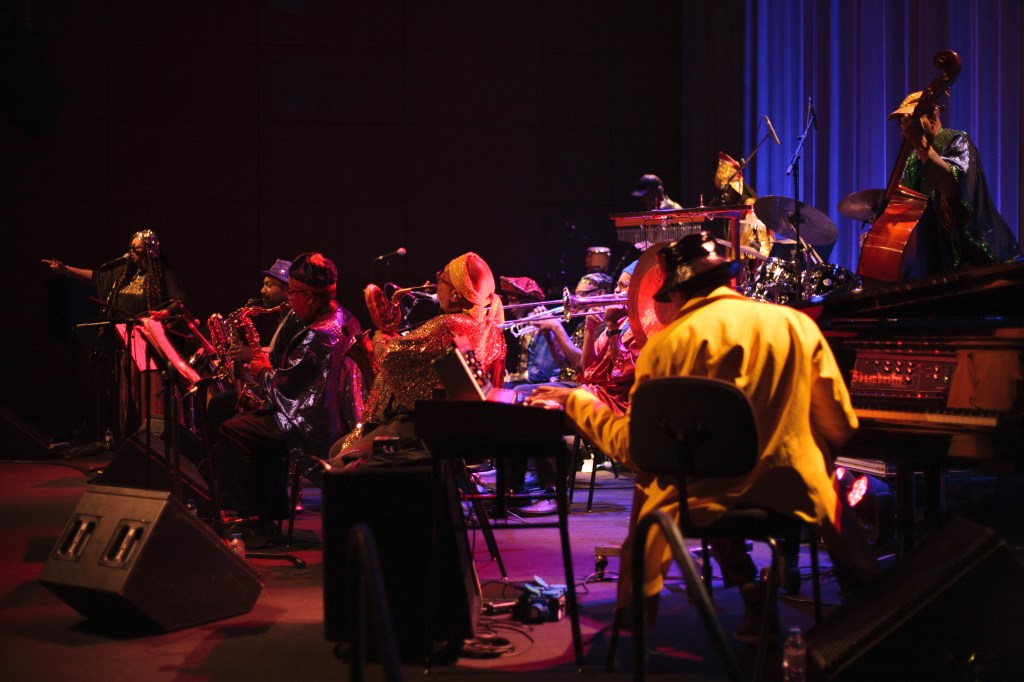
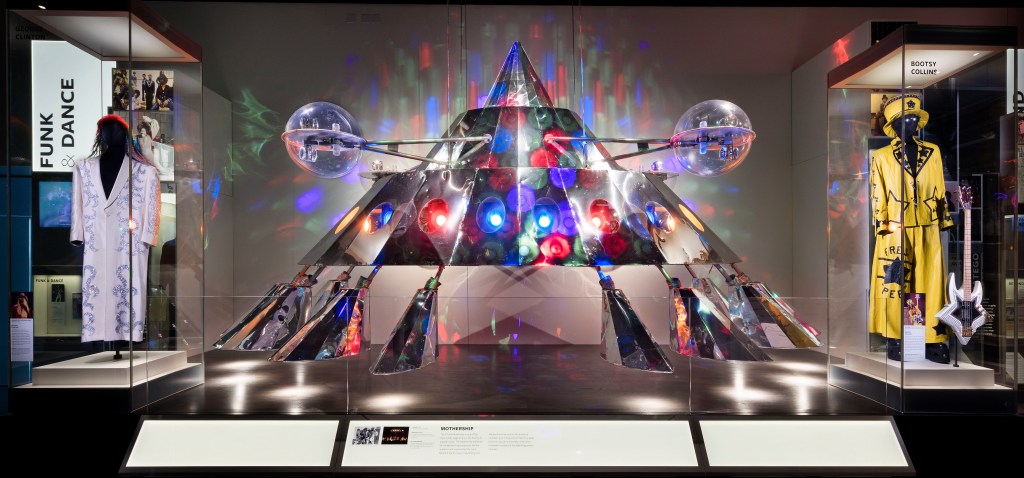
Afrofuturism, as described by Mark Dery, is an intersection of speculative fiction and Black American themes, addressing their concerns within the dynamic landscape of twentieth-century technoculture. Dery’s definition not only encapsulates the genre but retrospectively embraces artists like Sun Ra, George Clinton and Parliament-Funkadelic who paved the Afrofuturistic path long before the term emerged.
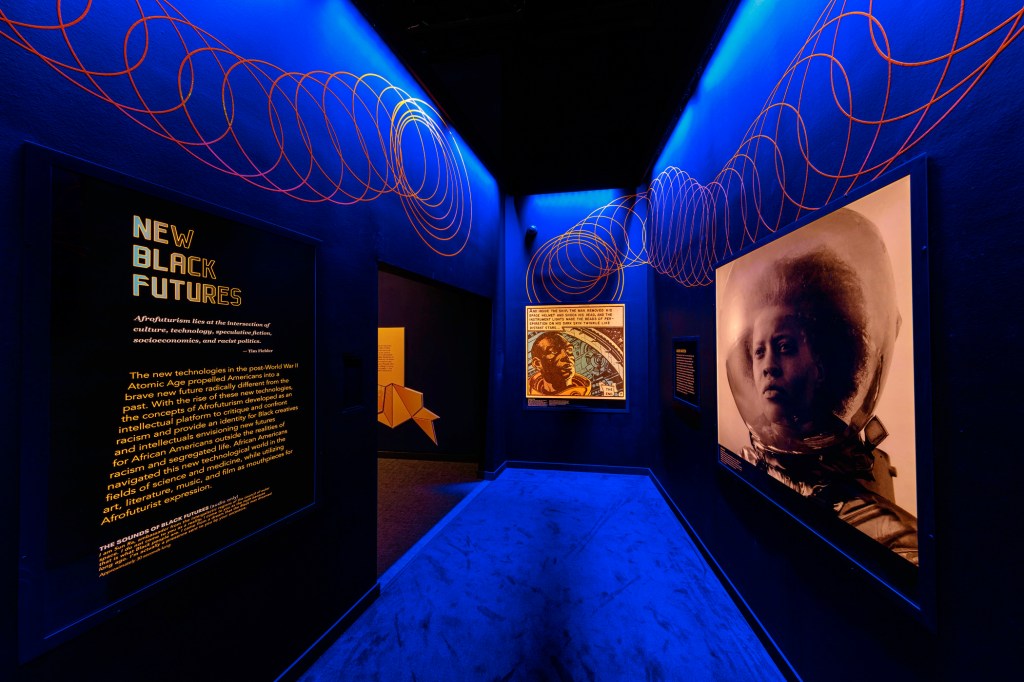
The National Museum of African American History and Culture (NMAAHC) enriches this definition, portraying Afrofuturism as a conduit for Black identity, agency and freedom. For decades, Afrofuturism has served as a sanctuary, offering solace to Black Americans amidst the challenges of daily life and providing creative havens free from societal restrictions, oppressions and stereotypes. In the face of the deliberate erasure of Black culture, Afrofuturistic visionaries boldly conjure worlds where potential futures come into vibrant existence.
Ytasha L. Womack’s book, “Afrofuturism: The World of Black Sci-Fi and Fantasy Culture,” stands as a guiding light, a beacon that illuminates the rich history and evolution of Afrofuturism. Womack’s insights transcend mere authorship; her work becomes a sacred text, a bible and a dictionary rolled into one. Through her lens, Afrofuturism emerges not merely as a creator of imagined worlds but as a powerful tool—a means of both escape from real-world tribulations and a method for scrutinizing the contemporary challenges faced by Black Americans.
The Essence of Afrofuturism
At its core, Afrofuturism is more than a genre. It’s an evolving conversation between the past, present and future. The movement’s key elements — cultural resilience, speculative fiction, spirituality, mythology, Afrocentric aesthetics, African cosmology and social commentary — resonate with many, including myself, on a deeply personal level. It’s a celebration of diverse voices and a challenge to envision futures that defy the constraints of the present.
In the eloquent words of Womack:
“Afrofuturism is a way of looking at the future and alternate realities through a Black cultural lens…It is an artistic aesthetic, but also a kind of method of self-liberation or self-healing. It can be part of critical race theory and in other respects, it’s an epistemology as well. It intersects the imagination, technology, Black culture, liberation and mysticism.
As an artistic aesthetic, it bridges literature, music, visual arts, film and dance. As a mode of self-healing and self-liberation, it’s the use of imagination that is most significant because it helps people to transform their circumstances. Imagining oneself in the future creates agency and it’s significant because historically people of African descent were not always incorporated into many of the storylines about the future.”
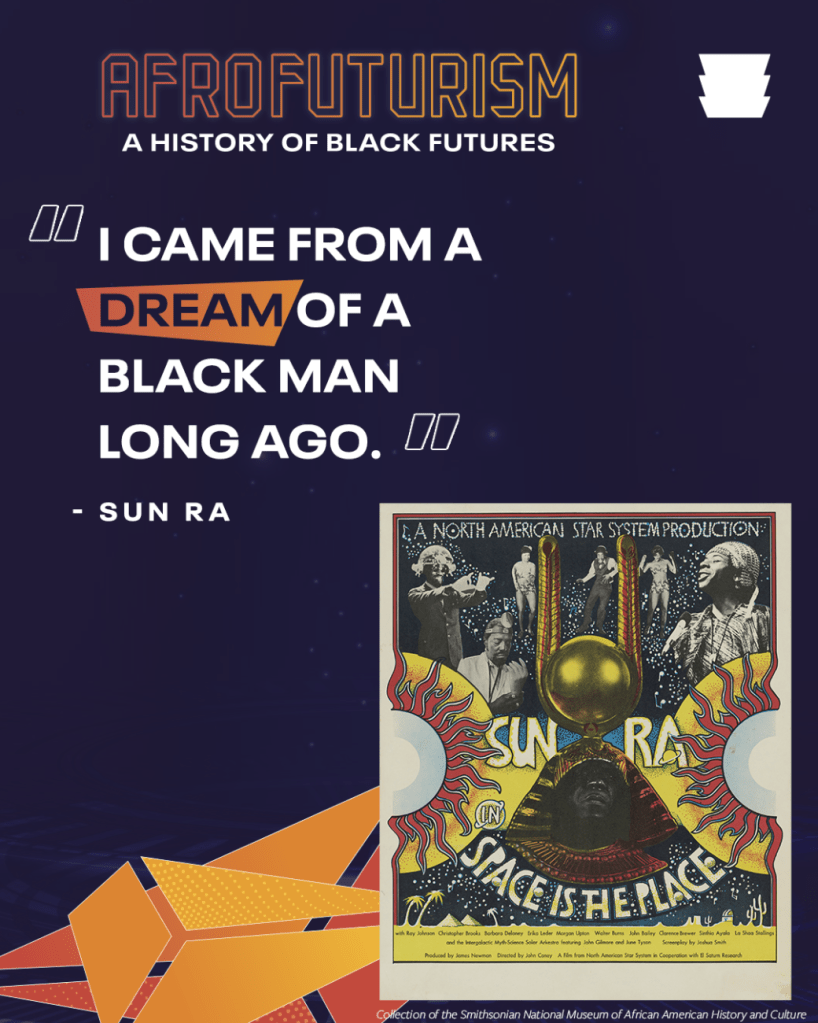
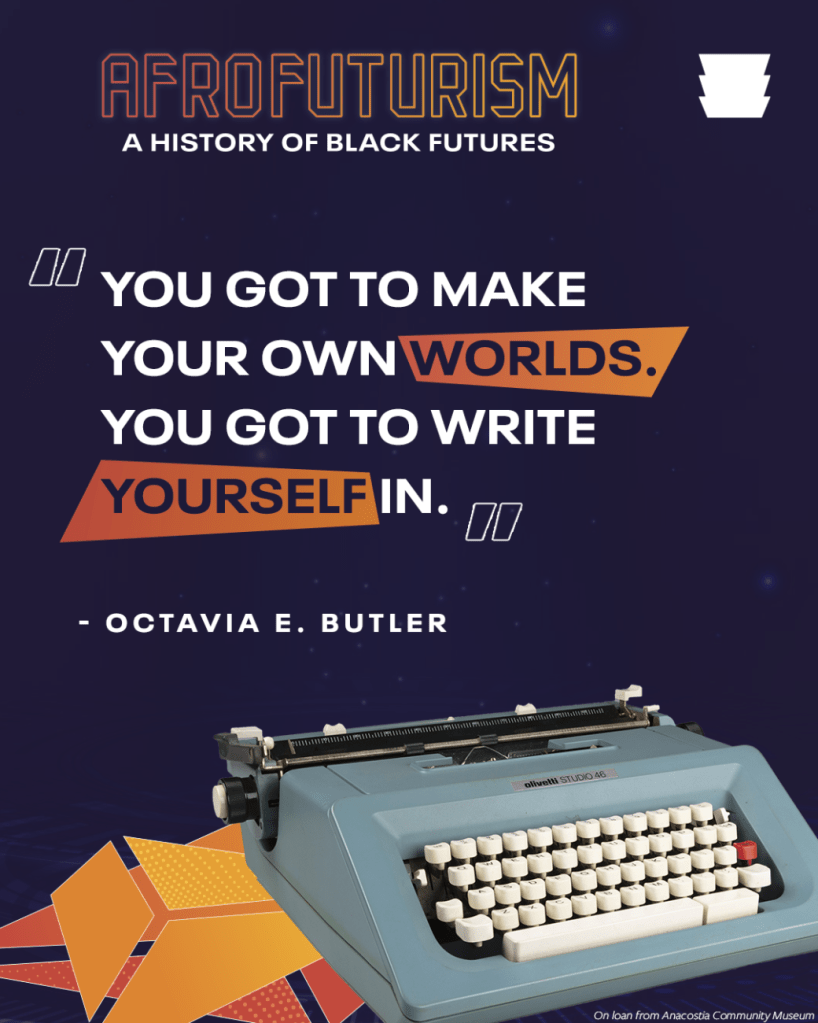
The roots of Afrofuturism take shape in the avant-garde jazz of Sun Ra, whose philosophy and musical genius laid the groundwork for the movement. The infusion of Afrofuturistic imagery into funk music, championed by icons like George Clinton and Parliament-Funkadelic, further propels this artistic revolution. Afrofuturism finds inspiration in the groundbreaking science fiction narratives penned by visionaries such as Octavia E. Butler, Samuel R. Delany and Ralph Ellison, as well as the evocative artwork of artists like Jean-Michel Basquiat and Romare Bearden.
Afrofuturism in Popular Culture
Over the years, Afrofuturistic expression has evolved and is now experiencing a renaissance all of its own, reaching new heights with blockbuster films like “Black Panther,” thought-provoking pieces like “Get Out” and “Sorry to Bother You,” and groundbreaking TV shows like “Luke Cage,” “Lovecraft Country,” “Atlanta” and “Watchmen.” This escalation extends beyond the page and screen into the sonic realm, where musical artists from Outkast and Missy Elliot to Erykah Badu, Janelle Monáe, Solange and Beyoncé have seamlessly woven Afrofuturism into their compositions, infusing Afrofuturistic themes and aesthetics.
After all, whether you found yourself physically present at Beyoncé’s 2023 Renaissance Tour or not, the Afrofuturistic concert experience orchestrated by Queen Bey left a mark on all of us in one way or another. Yet, as Afrofuturism experiences a surge in popularity, and while many may be familiar with Afrofuturist media, the genre itself remains complex, rich and waiting to be explored further.
My Dive into Afrofuturism
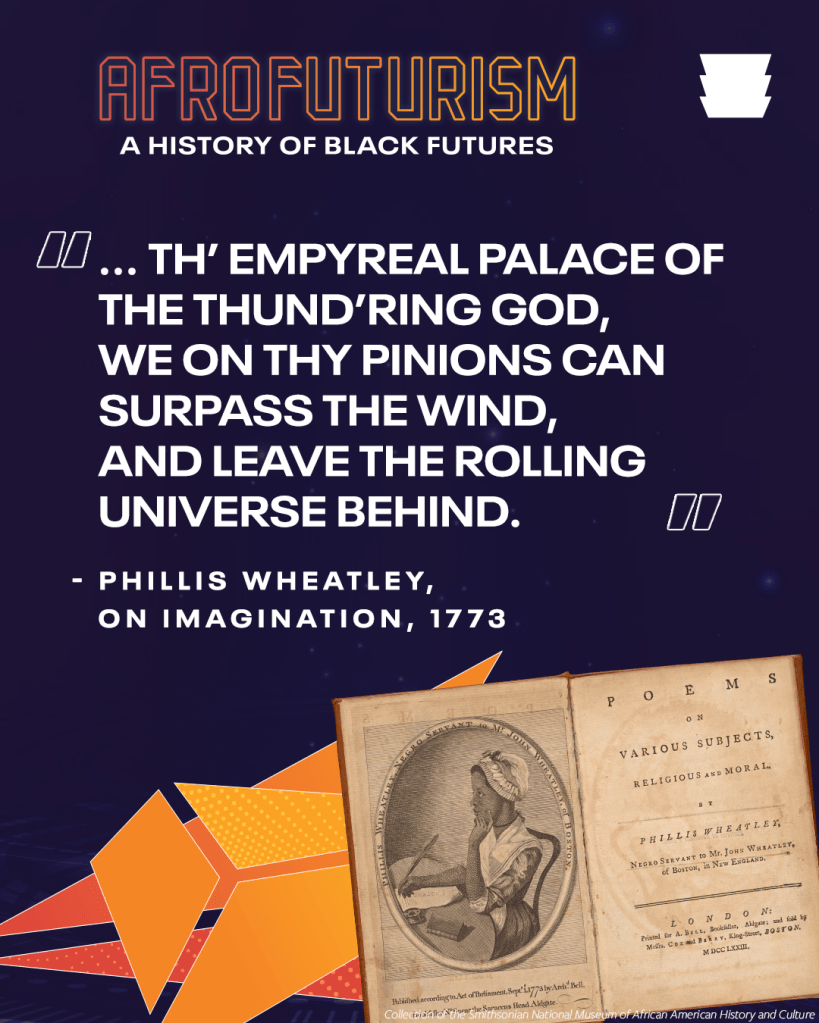
Afrofuturism is a cultural phenomenon, a sanctuary and a source of inspiration. It examines the past, envisions the future and most importantly, is as a dynamic force that empowers Black voices to shape their own narratives within the expansive and ever-evolving universe of Afrofuturism. As we continue to navigate the wonderful intricacies of Afrofuturism, my journey is fueled by a desire to understand, question and celebrate the diversity of these narratives.
Afrofuturism is a personal odyssey that invites us to shape our own narratives within the ever-expanding universe of possibilities. With each Afrofuturist work, I find myself not just witnessing, but actively participating in a movement that challenges, inspires and redefines what it means to envision a future beyond the ordinary. It is my greatest hope that our Beginner’s Guide to Afrofuturism community can do the same.
What does Afrofuturism mean to you? How would you articulate its significance? Let me know in the comments below!
 The Beginner's Guide to Afrofuturism
Leave a comment